How Often Should Gutters Be Cleaned in Baton Rouge?
Most Baton Rouge homeowners should clean their gutters at least twice a year, once in spring and once in fall. However, homes located near mature oaks, cypress, or pecan trees, those with steep-pitched roofs, or those frequently exposed to Gulf thunderstorms and tropical downpours may require more frequent gutter maintenance.
According to the U.S. General Services Administration, gutter systems should be cleared of debris twice annually to prevent water overflow and foundation damage. The U.S. Department of Energy also notes that even light rainfall can generate thousands of gallons of runoff from your roof, which can overwhelm a clogged or neglected gutter system.
In this guide, we’ll break down how Baton Rouge’s subtropical climate, tree canopy, and roof design variables impact your optimal gutter cleaning schedule.
General Gutter Cleaning Recommendations (US Guidelines)
The U.S. General Services Administration (GSA), along with multiple federal and industry organizations, recommends a baseline of biannual gutter cleaning typically once in late spring and again in late fall. These cleanings align with peak seasonal debris cycles: spring blossoms and seed pods, followed by heavy leaf drop in autumn.
Beyond this minimum, the GSA’s technical guidelines advise more frequent checks in certain conditions. Weekly inspections are encouraged during peak leaf fall in autumn, while monthly winter assessments help detect obstructions from ice or trapped moisture. Post-storm inspections are also critical especially in areas prone to strong wind and rain, like Baton Rouge.
Both the National Association of Home Builders (NAHB) and the National Roofing Contractors Association (NRCA) support the spring/fall cleaning model as the national industry standard.
Their priority is protecting homes from water-related structural issues, especially affecting roofing systems, siding, and home foundations.
For added perspective, the U.S. Department of Energy reports that even minor rainfall can result in thousands of gallons of roof runoff. When gutters are blocked, this water may overflow, seep into crawlspaces, or compromise the home’s foundation over time.
While twice-a-year cleaning is a reliable national starting point, it may not be enough for homes in Baton Rouge’s subtropical climate. In the next sections, we’ll examine how local factors including frequent storms, tree density, roof structure, and soil conditions can influence your ideal cleaning schedule.
Local Factors That Affect Gutter Cleaning Frequency in Baton Rouge
Baton Rouge’s humid subtropical climate, dense tree canopy, and frequent storm events create unique conditions that directly impact how often gutters need to be cleaned. While national standards recommend biannual maintenance, local environmental stressors often demand a more frequent schedule.
1. Seasonal Weather Extremes
Baton Rouge experiences intense spring and summer thunderstorms, often delivering several inches of rain in a short period. These downpours can overwhelm gutters clogged with twigs, Spanish moss, seed pods, or roofing granules. Unlike colder regions, winter doesn’t bring freeze-thaw cycles, but the volume and velocity of rainfall increase the risk of overflow and structural water damage year-round.
2. Tree Coverage and Native Species
Homes near Southern Live Oaks, Cypress trees, or Pecans are particularly vulnerable to gutter clogs. Live Oaks shed leaves and catkins heavily in spring, while Pecans drop nuts, husks, and twigs throughout fall. Properties surrounded by these species may require three to four cleanings annually to maintain free-flowing gutters.
3. Heavy Spring and Summer Rainfall
Baton Rouge’s rainy season runs from late spring through early fall, with high humidity and near-daily showers during some months. Gutters must remain clear during this time to manage rapid runoff. Mid-season inspections, especially after tropical storms or hurricanes, are critical for homes with dense vegetation or intricate roof layouts.
4. Freeze-Thaw Damage in Winter
Though freezing temperatures are rare, year-round heat and moisture accelerate organic debris breakdown inside the gutter system. This leads to sludge buildup, mold growth, and insect nesting. Without regular cleanouts, gutters may sag, corrode, or leak at seams, particularly under the weight of water-logged material.
5. Local Soil and Drainage Risk
Baton Rouge soils are often clay-rich and poorly draining. If gutters are blocked and discharge water near the home, it can quickly lead to foundation saturation, crawl space flooding, or shifting concrete slabs. Clean gutters are essential for controlling runoff and protecting the building envelope.
6. Debris Type and Weight
In Baton Rouge, seasonal debris includes sticky pollen in spring, twigs and seed pods in summer, and dense, moisture-heavy leaves in fall. Once wet, this material becomes extremely heavy, placing strain on gutter fasteners and increasing the risk of sagging or full detachment during storms.
How Seasons Influence Gutter Maintenance Needs in Louisiana
Louisiana’s humid subtropical climate introduces distinct seasonal challenges to gutter systems, especially in Baton Rouge, where tropical storms, long rainy seasons, and dense tree cover are common. Understanding how each season affects your gutters is key to preventing clogs, water intrusion, and structural damage.
Winter: Ice Dams and Structural Stress
Although freezing is rare in Baton Rouge, winter months remain wet and cool, increasing the risk of standing water in clogged gutters. Excess moisture can lead to mold, mildew, and algae growth, especially in shaded areas. Gutters that aren’t cleared before winter may overflow during heavy rains or harbor pests like mosquitoes and ants. A late fall cleaning ensures your system is prepared for the wetter winter months.
Spring: Rainfall and Seed Pod Accumulation
Spring brings frequent thunderstorms and seed debris from oaks, pecans, and cypress trees. Catkins, seed pods, and flower blossoms can quickly mat together and clog gutters. Combined with warm temperatures and high humidity, this buildup creates a fertile environment for weeds and saplings to grow inside your gutter system. A mid-spring inspection is essential for homes surrounded by mature trees.
Summer: Storm Debris and System Strain
Baton Rouge summers are marked by tropical activity, heavy rain, and high winds. Even gutters cleaned in spring may become clogged again after a single storm. Downpours during hurricane season test the full capacity of your drainage system. Mid-summer cleanouts can help reduce overflow risks and prevent foundation saturation during peak weather events.
Fall: Leaf Volume and Ice Risk Preparation
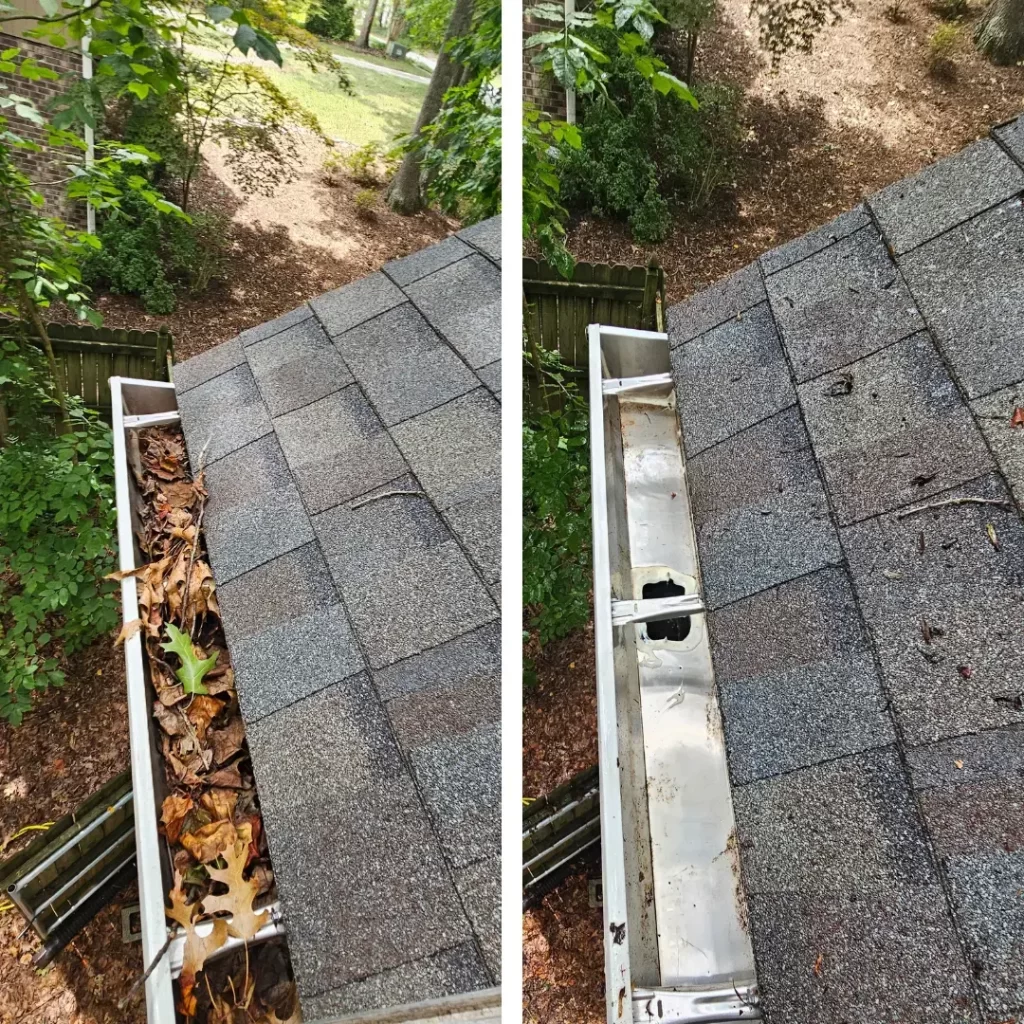
Fall in Baton Rouge brings heavy leaf shedding from native oaks and other deciduous trees. These leaves absorb water and weigh down gutters, stressing brackets and seams. If left unaddressed, this organic debris can trap moisture through the winter months, increasing the likelihood of wood rot and gutter failure. A late November cleaning prepares your system for steady winter rainfall.
How to Know It’s Time to Clean Your Gutters
Recognizing early warning signs of clogged gutters can help Baton Rouge homeowners prevent costly issues like foundation damage, moisture intrusion, and roof failure. Here are the most common indicators that your gutters need cleaning:
1. Water Overflow During Rainfall
If water pours over the edge of your gutters during a Gulf storm or summer downpour, instead of draining through the downspouts, it points to a serious blockage. In Baton Rouge’s climate, this overflow can cause soil erosion, driveway pooling, or even slab foundation problems.
2. Sagging or Pulling Away From the Roofline
If gutters are pulling away from the fascia or visibly sagging, they may be overloaded with storm debris, leaf buildup, or trapped water. This added weight can damage mounting brackets, warp fascia boards, and lead to complete detachment during high winds.
3. Vegetation or Plant Growth
The appearance of moss, weeds, or even small saplings growing from your gutters indicates long-term clogging and high moisture retention. This is common in Baton Rouge during wet spring and fall seasons and signals a need for immediate cleaning.
4. Visible Debris or “Tiger Stripes”
If you see twigs, mud, or pine needles protruding from the gutter or notice dark streaks commonly called tiger stripes running down the face of the gutter, it means water has been spilling over due to blockages. These stains form when dirty water escapes consistently during rain.
5. Mold, Mildew, or Algae on Siding or Roof
With Baton Rouge’s high humidity and warm temperatures, biological growth is accelerated. If mold or algae appear near gutters, it often means that poor drainage is keeping siding or rooflines damp, leading to wood rot, paint damage, or shingle deterioration.
6. Soil Erosion or Pooling Water Near the Foundation
Gutters should direct water at least 3 to 5 feet away from your home. If you notice soft soil, cracks, or puddles near your foundation, especially after a rainstorm, your gutter system is failing to control runoff, putting your slab or piers at risk.
7. Insect or Animal Activity
Baton Rouge’s warm, wet environment attracts pests. If you notice mosquitoes, ants, birds, or rodents near your roofline, they may be nesting in clogged gutters where stagnant water and decomposing debris provide ideal conditions.
Suggested Cleaning Schedules for Baton Rouge Homeowners
Your ideal gutter cleaning schedule depends on your home’s tree density, roof structure, and Baton Rouge’s humid, storm-prone climate. Use the following guidelines:
Twice-Yearly (Minimum)
When: April–May and November–December > Best for: omes with minimal tree cover, newer gutters, and no history of water damage or pooling
Three Times Per Year
When: Spring, late June (after oak and cypress seed drop), late fall > Best for: Homes with Southern Live Oaks, Pecans, Cypress, or aging gutter systems
Quarterly (Every 3 Months)
When: Spring, summer, fall, pre-winter > Best for: Homes with dense canopy, multi-level roofs, or past issues with foundation runoff or storm-related clogging
Post-Storm or As-Needed Cleaning
Trigger: After tropical storms, strong summer thunderstorms, or prolonged rain events > Why: Baton Rouge storms often bring leaf litter, roof granules, and windblown debris that can clog gutters overnight
What Does Gutter Cleaning Cost in Baton Rouge?
The average price for gutter cleaning in Baton Rouge ranges from $210 for smaller homes to over $329 for larger homes, depending on gutter length, roofline complexity, and debris severity, especially following storm season.
In Baton Rouge, Clean Pro Gutter Cleaning charges $2 per linear foot, with a minimum fee that scales based on home size and accessibility.
What’s The Best Gutter Cleaning Service in Baton Rouge?
Clean Pro Gutter Cleaning is Baton Rouge’s most trusted gutter maintenance provider, known for quick scheduling, long-lasting results, and its proprietary AquaBlast system, which removes even the most stubborn seasonal clogs.
With over 205 five-star reviews from local Louisiana homeowners and 24 years of regional experience, Clean Pro’s licensed technicians handle everything from spring pollen buildup to post-storm leaf and debris overload. Each service includes a full debris flush, downspout inspection, and water flow test, ensuring your gutters are prepared for Louisiana’s heavy rainfall and tropical weather.
✅ Appointments available Monday through Saturday, with service scheduled within 72 hours of booking
✅ Fully licensed and insured professionals based in Baton Rouge and surrounding parishes
✅ Prices start at just $210 and include a 100% satisfaction guarantee
Whether you’re dealing with foundation runoff, tropical storm aftermath, or pest-attracting gutter debris, Clean Pro delivers expert service that protects Baton Rouge homes year-round.
Why Choose Clean Pro Gutter Cleaning?
A Personal Promise from Clean Pro’s Owner:
“Homeowners can count on me and my team at Clean Pro for exceptional results. We have been in business since 2001 and served Tens of thousands customer since that time. ”
– Jonathan D. Byrd I, Founder & CEO

Ready to Protect Your Home?
Save Big with Clean Pro Gutter Cleaning Today
Stop worrying about your gutters. Cleanings start at just $210, so everyone can afford it. Get the best gutter cleaning in Baton Rouge, fast and hassle-free. At Clean Pro Gutter Cleaning, we have you covered!