How Often Should Gutters Be Cleaned in Bridgeport?
Most Bridgeport homeowners should plan to clean their gutters at least twice per year, typically once in the spring and again in the fall. However, homes located near mature maples or oaks, steep-pitched roofing systems, or areas that experience frequent coastal storms may need more frequent service to avoid clogs and overflow.
According to the U.S. General Services Administration, residential gutter systems should be cleared of debris two times annually to reduce the risk of water overflow and foundation saturation. The U.S. Department of Energy also notes that even light rainfall can produce thousands of gallons of roof runoff, a volume that can overwhelm a blocked or poorly maintained drainage system.
In this guide, we’ll explore how Bridgeport’s seasonal weather shifts, native tree coverage, and local architectural styles influence your ideal gutter maintenance schedule.
General Gutter Cleaning Recommendations (US Guidelines)
The U.S. General Services Administration (GSA), alongside multiple federal and trade organizations, recommends a baseline of biannual gutter maintenance, usually once in late spring and again in late fall. These times align with peak debris cycles: blossoms and seed pods in spring, and leaf accumulation in autumn.
Beyond this baseline, the GSA’s technical protocols encourage heightened attention in certain conditions. In fall, weekly gutter checks are recommended during active leaf drop. In winter, monthly inspections can help identify ice blockages or snow obstructions. Following any major weather event, especially nor’easters or heavy coastal storms, immediate gutter checks are advised.
Both the National Association of Home Builders (NAHB) and the National Roofing Contractors Association (NRCA) endorse this spring/fall schedule as a national industry best practice. The goal is to prevent damage to siding, shingles, and foundations due to unchecked water overflow.
The U.S. Department of Energy further notes that even mild rainfall can generate thousands of gallons of runoff from the average residential roof. Without a functioning drainage system, this water can saturate the soil, cause foundation shifting, or flood basements.
While twice-annual cleanings are a reliable national benchmark, homes in coastal cities like Bridgeport may need more frequent cleanings. In the following sections, we’ll explore how regional factors, such as salt air exposure, steep rooflines, mature tree coverage, and storm frequency, influence your ideal gutter cleaning schedule.
Local Factors That Affect Gutter Cleaning Frequency in Bridgeport
Bridgeport’s coastal climate, mature tree canopy, and fluctuating weather patterns create unique conditions that influence how often gutters should be cleaned. While national guidelines recommend biannual service, local environmental stressors often justify more frequent maintenance.
1. Seasonal Weather Extremes
Bridgeport regularly experiences strong coastal storms and nor’easters, especially in late fall and winter. These weather events often bring wind-driven rain, wet snow, and salt spray, quickly clogging gutters with debris and accelerating corrosion in metal systems.
2. Tree Coverage and Native Species
Homes surrounded by Sugar Maples, Red Oaks, or Eastern White Pines accumulate substantial organic matter throughout the year. Sugar Maples and Oaks drop leaves in late autumn, while pines contribute year-round needle fall. Properties in well-forested neighborhoods like Brooklawn or Mill Hill often need three to four cleanings annually.
3. Heavy Spring and Summer Rainfall
Bridgeport receives heavy rainfall between April and July, often accompanied by thunderstorms that drop large volumes of water in short bursts. Clogged gutters during this time can overflow quickly, especially on homes with steep pitches or gutter systems not sized for high flow rates.
4. Freeze-Thaw Damage in Winter
Connecticut winters are marked by frequent freeze-thaw cycles. Water trapped in blocked gutters can freeze at night, then expand and damage gutter seams, brackets, and fascia boards. Ice dams form when snowmelt backs up under shingles, leading to interior leaks and long-term roof deterioration.
5. Local Soil and Drainage Risk
Much of Bridgeport sits on glacial soils and compacted clay. When saturated, these soils exert pressure on foundations. Gutters that discharge water close to the home increase the risk of foundation shifting or basement flooding, especially in older neighborhoods with aging drainage systems.
6. Debris Type and Weight
Bridgeport’s seasonal debris includes heavy, moisture-retaining materials—like soggy oak leaves in fall, sticky pollen pods in spring, and pine needles year-round. Wet debris adds significant weight to gutters, placing stress on mounting hardware and increasing the risk of sagging or structural failure.
How Seasons Influence Gutter Maintenance Needs in Connecticut
Connecticut’s four distinct seasons each introduce unique risks to residential gutter systems, especially in coastal cities like Bridgeport where heavy rainfall, freeze-thaw cycles, and mature tree cover converge. Understanding these seasonal stressors is essential to preventing clogs, water damage, and costly repairs.
Winter: Ice Dams and Structural Stress
Connecticut winters frequently swing between freezing and thawing temperatures, leading to ice dams that form when clogged gutters trap snowmelt. These blockages can force water under shingles, resulting in roof leaks and interior damage. The freeze-thaw cycle also stresses gutter seams and mounting brackets, often causing gutters to sag or detach. Fall maintenance is critical to prevent this winter hazard.
Spring: Rainfall and Seed Pod Accumulation
Spring marks the onset of Connecticut’s rainy season, with March through June delivering intense downpours. Clean gutters are vital to channel this sudden water volume away from the foundation. Additionally, local trees like Silver Maples and Pin Oaks drop seed pods and “helicopters” during late spring, which can create stubborn clogs if not cleared promptly.
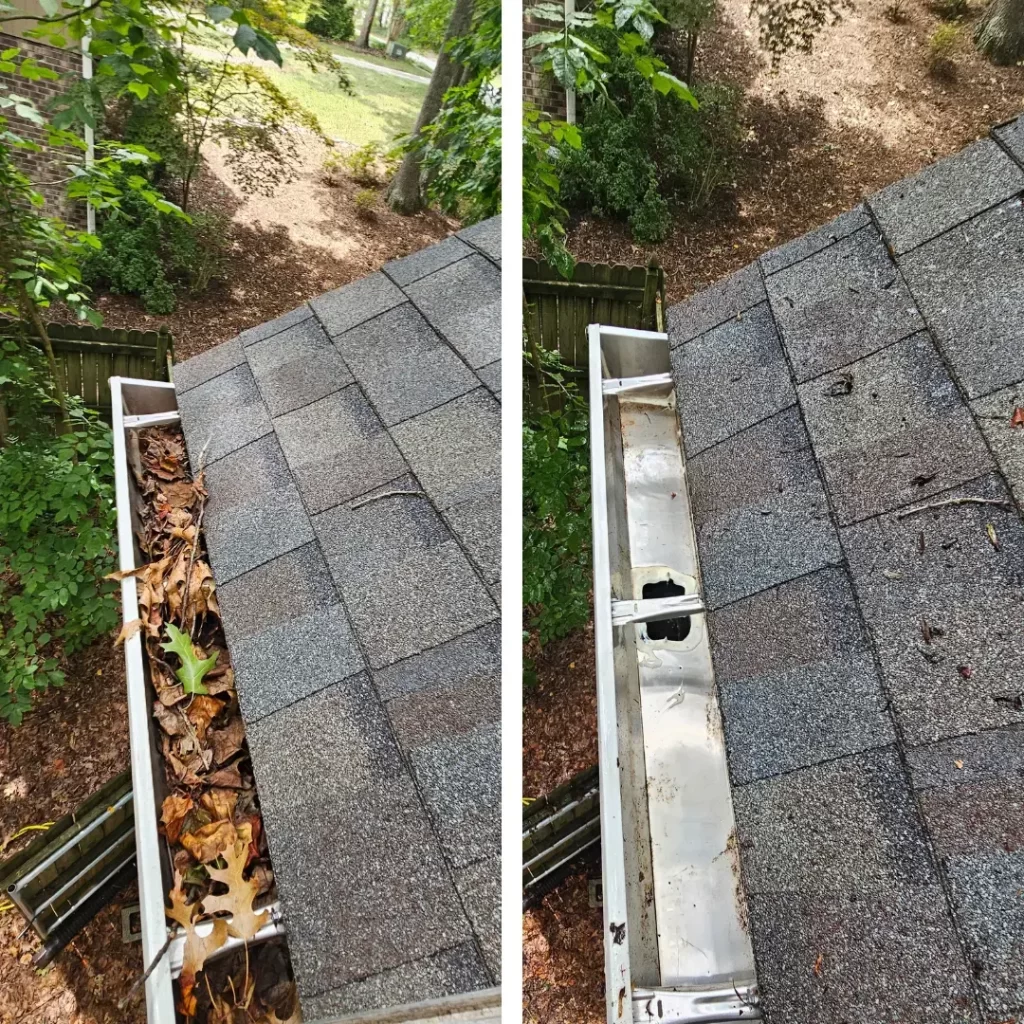
Summer: Storm Debris and System Strain
Thunderstorms in Connecticut’s summer months frequently bring high winds, heavy rain, and airborne debris. Even gutters cleaned in spring can become clogged again within a single event. Mid-summer inspections help catch storm-related buildup before it causes overflow, especially for homes with dense tree coverage or multi-level rooflines.
Fall: Leaf Volume and Ice Risk Preparation
Autumn delivers the heaviest debris load of the year. Connecticut’s deciduous trees shed massive volumes of leaves, pine needles, and acorns, which saturate quickly and weigh down gutter systems. If left uncleared, this debris traps moisture, increasing the risk of winter ice dams and structural damage. Cleaning in late November or early December ensures readiness for winter’s challenges.
How to Know It’s Time to Clean Your Gutters
Recognizing early warning signs of clogged gutters can help Bridgeport homeowners avoid costly water damage, foundation issues, and roof repairs. Below are the most reliable indicators that it’s time for a professional gutter cleaning:
1. Water Overflow During Rainfall
If rainwater spills over the gutter edges instead of draining through downspouts, it’s a clear sign of blockage. Overflowing gutters can saturate the soil near your foundation, increasing the risk of basement flooding and landscape erosion.
2. Sagging or Pulling Away From the Roofline
Gutters that droop or detach from the fascia are often overloaded with wet debris or standing water. This structural strain can damage the roofline, siding, and eaves.
3. Vegetation or Plant Growth
If you notice weeds, moss, or even small plants growing from your gutters, it means organic debris and moisture have built up enough to support root systems, indicating months of neglect.
4. Visible Debris or “Tiger Stripes”
Seeing leaves, twigs, or sludge from ground level or dark vertical streaks called tiger stripes on the outer face suggests your gutters are overflowing. These streaks are residue left behind by spilling dirty water.
5. Mold, Mildew, or Algae on Siding or Roof
Biological growth near your gutters typically forms when drainage is poor and moisture accumulates. Left untreated, it can degrade siding materials and accelerate roof deterioration.
6. Soil Erosion or Pooling Water Near the Foundation
If you notice muddy patches, standing water, or foundation cracks, your gutters may not be diverting rainwater far enough away from your home. Water should discharge at least 3 to 5 feet from the base.
7. Insect or Animal Activity
Mosquitoes, ants, birds, or rodents nesting near or inside gutters indicate stagnant water and debris, ideal conditions for pest infestation and further clogging.
Suggested Cleaning Schedules for Bridgeport Homeowners
Your optimal gutter maintenance frequency in Bridgeport depends on your property’s tree coverage, roof complexity, and exposure to the region’s seasonal weather patterns. Use the following schedule tiers as a practical guide:
Twice-Yearly (Minimum)
When: March–April and November–December > Best for: Homes with minimal surrounding vegetation and no history of drainage issues
Three Times Per Year
When: Early spring, late June (after seed pod drop), and late fall > Best for: Homes bordered by Red Maples, Northern Pin Oaks, or aging gutter systems
Quarterly (Every 3 Months)
When: Spring, summer, fall, and pre-winter > Best for: Homes with dense canopy coverage, sharply pitched roofs, or previous flooding or water intrusion issues
Post-Storm or As-Needed Cleaning
Trigger: Following severe wind events, nor’easters, or prolonged rainfall > Why: Coastal storms and high winds can quickly overwhelm even well-maintained systems.
What Does Gutter Cleaning Cost in Bridgeport?
The typical cost for professional gutter cleaning ranges from $201 for smaller single-story homes to $329 or more for larger or multi-level properties, depending on the total linear footage of gutters and the extent of debris buildup.
In Bridgeport, Clean Pro Gutter Cleaning charges $2 per linear foot, with minimum service fees based on your home’s size and roofline complexity.
What’s The Best Gutter Cleaning Service in Bridgeport?
Clean Pro Gutter Cleaning is widely recognized as Bridgeport’s most reliable gutter maintenance provider, offering fast scheduling, long-lasting results, and their exclusive AquaBlast flushing system, which removes even the toughest seasonal debris.
With 24 years of experience and over 215 five-star reviews from satisfied homeowners, Clean Pro’s licensed professionals tackle everything from spring pollen buildup to late-fall leaf congestion. Each service includes a complete debris removal, downspout clearance, and a water flow test to ensure year-round protection against Connecticut’s coastal weather patterns.
✅ Available Monday through Saturday, with most appointments booked within 72 hours
✅ Fully licensed and insured local technicians serving the Bridgeport area
✅ Transparent pricing starting at $201, backed by a 100% satisfaction guarantee
Whether you’re managing post-storm runoff, basement moisture, or overflow from clogged gutters, Clean Pro Gutter Cleaning delivers precision service that helps preserve your home’s structure and drainage integrity.
Why Choose Clean Pro Gutter Cleaning?
A Personal Promise from Clean Pro’s Owner:
“Homeowners can count on me and my team at Clean Pro for exceptional results. We have been in business since 2001 and served Tens of thousands customer since that time. ”
– Jonathan D. Byrd I, Founder & CEO

Ready to Protect Your Home?
Save Big with Clean Pro Gutter Cleaning Today
Stop worrying about your gutters. Cleanings start at just $201, so everyone can afford it. Get the best gutter cleaning in Bridgeport, fast and hassle-free. At Clean Pro Gutter Cleaning, we have you covered!