How Often Should Gutters Be Cleaned in Richardson?
Most Richardson homeowners should clean their gutters at least twice a year, once in the spring and again in the fall. However, properties located beneath mature oaks, pecan trees, or homes with steep roof slopes or located in areas prone to heavy storms may need more frequent maintenance.
According to the U.S. General Services Administration, clearing gutters twice annually is the national standard to prevent overflow, erosion, and costly foundation damage. The U.S. Department of Energy further explains that even mild rainfall events can generate thousands of gallons of roof runoff, easily overwhelming a clogged gutter system and causing water to pool near the home’s perimeter.
In this localized guide, we’ll explore how Richardson’s North Texas weather patterns, dominant tree species, and neighborhood construction styles influence your ideal gutter cleaning schedule.
General Gutter Cleaning Recommendations (US Guidelines)
The U.S. General Services Administration (GSA), in collaboration with multiple federal agencies and industry associations, advises homeowners to schedule gutter cleaning at least twice per year, once in late spring and again in late fall. These periods align with peak seasonal debris: spring pollen, seed pods, and blossoms, followed by significant leaf drop in autumn.
However, beyond this baseline, the GSA’s maintenance protocols emphasize added attention during certain conditions. Weekly inspections are recommended throughout the fall when leaf accumulation is active, while monthly winter checks can help identify potential blockages from ice or lingering debris. Gutter inspections are also encouraged immediately after major weather events such as storms or high winds.
Supporting this approach, the National Association of Home Builders (NAHB) and the National Roofing Contractors Association (NRCA) both advocate for spring and fall gutter maintenance as a critical standard for protecting structural elements such as roofs, siding, soffits, and foundations from water-related damage.
The U.S. Department of Energy also underscores the risk: even light rainfall can create thousands of gallons of roof runoff. Without clear drainage paths, this water can pool around a home’s foundation or seep into crawlspaces, particularly dangerous for homes with expansive clay soil, like those found throughout Richardson and the greater Dallas-Fort Worth area.
While the twice-a-year national standard works for many homes, in North Texas cities like Richardson, factors like tree density, regional rainfall intensity, roofing slope, and shifting soils may require a more proactive cleaning schedule. The following sections will break down how local conditions influence your home’s optimal gutter maintenance plan.
Local Factors That Affect Gutter Cleaning Frequency in Richardson
Richardson’s shifting North Texas climate, sprawling residential tree canopy, and frequent storm activity create conditions that require more than just national baseline gutter maintenance. While biannual cleaning is the federal minimum, homeowners in Richardson often need a more customized schedule based on local variables.
1. Seasonal Weather Extremes
Richardson experiences volatile weather, particularly during spring and early summer, when severe thunderstorms can drop multiple inches of rain within a short period. Gutters that are partially blocked by seed pods, pollen, or shingle debris may back up quickly under such high-volume rainfall. Winter can bring occasional freezes, which exacerbate issues when trapped water expands within clogged systems.
2. Tree Coverage and Native Species
Neighborhoods filled with Live Oaks, Red Oaks, and Cedar Elms face year-round shedding of organic debris. These trees drop pollen, catkins, leaves, and twigs in cycles, with Live Oaks shedding in spring and Cedar Elms in fall. Homes beneath dense foliage or corner lots often need three to four cleanings per year to maintain clear water pathways.
3. Heavy Spring and Summer Rainfall
Richardson’s rainy season stretches from late March into early fall. During this time, high winds and thunderstorms deposit sticks, buds, and roofing grit into gutters. Properties with multi-level or steep-pitched roofs are particularly prone to gutter overload. A mid-year inspection, especially in June or July, can prevent system backups during peak rain.
4. Freeze-Thaw Damage in Winter
Though not as common as in northern climates, Richardson does experience occasional winter freezes. When standing water is trapped in gutters by autumn debris, overnight freezing can damage seams, pull hardware loose, or shift gutters out of alignment. Pre-winter cleaning helps mitigate these freeze-thaw vulnerabilities.
5. Local Soil and Drainage Risk
Like many cities in the DFW Metroplex, Richardson sits on highly expansive clay soil. This soil expands dramatically when saturated and contracts during drought, putting foundations under stress. Gutters that discharge water too close to the home accelerate this cycle. Clean gutters that direct runoff at least 5 feet away from the slab are essential for foundation health.
6. Debris Type and Weight
In Richardson, the composition of gutter debris changes with the seasons: spring brings pollen mats and catkins, summer introduces storm-broken twigs, and fall delivers dense, moisture-heavy leaves. When soaked, this debris becomes significantly heavier, placing added strain on fasteners and increasing the risk of sagging or gutter detachment.
How Seasons Influence Gutter Maintenance Needs in Texas
Texas’s diverse climate, from humid Gulf Coast storms to Central Texas oak shedding and North Texas freeze events, creates a variety of seasonal stressors that impact residential gutter systems. Understanding how Texas weather patterns affect gutter performance can help homeowners prevent clogs, water intrusion, and structural damage year-round.
Winter: Ice Dams and Structural Stress
While Texas winters are generally mild, sudden cold fronts can bring overnight freezes and ice formation. When gutters are filled with water or debris, freezing expands the material, damaging seams, loosening hangers, and causing gutters to sag or pull away from the fascia. A fall cleaning before the first freeze is essential across much of the state.
Spring: Rainfall and Seed Pod Accumulation
In spring, native Texas trees like Live Oaks, Red Oaks, and Cedar Elms shed pollen, catkins, and seed pods that clog gutters quickly. This coincides with heavy spring thunderstorms common throughout the state, from Dallas to Houston, delivering high rainfall in short bursts. Blocked gutters during this time often lead to water intrusion at the foundation level.
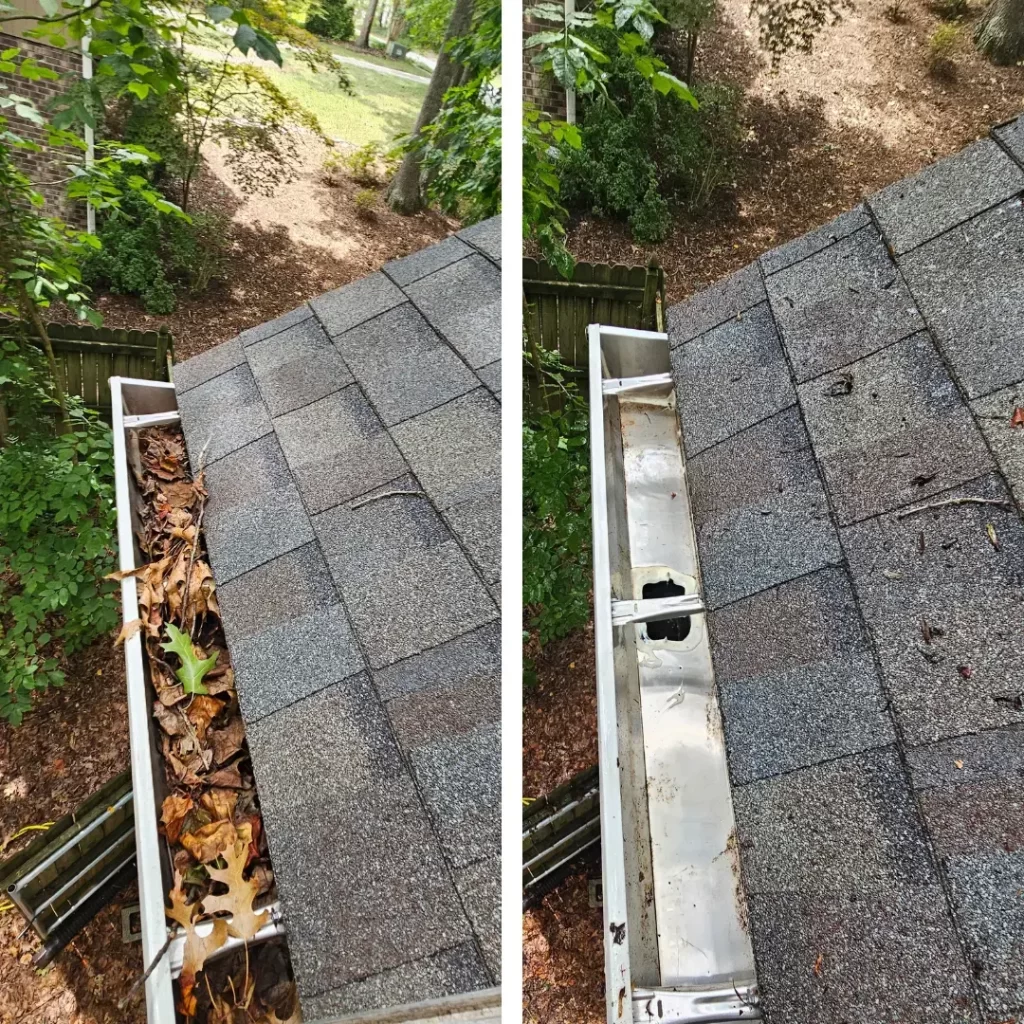
Summer: Storm Debris and System Strain
Texas summers bring flash storms and hurricane remnants that drop inches of rain in minutes. Gutters filled with twigs, shingle grit, or leaf buildup from earlier in the season can’t handle the runoff, especially in homes with steep or multi-level roofs. A mid-summer inspection ensures the system remains functional during these intense weather events.
Fall: Leaf Volume and Ice Risk Preparation
During fall, Texas sees significant leaf shedding from native hardwoods. In Central and East Texas especially, this debris accumulates quickly, holding moisture and encouraging pest activity. If left uncleared, saturated organic material leads to gutter strain, overflow, and winter freeze hazards. Cleaning in November or early December is vital to prepare for seasonal transitions.
How to Know It’s Time to Clean Your Gutters
Spotting the early signs of gutter clogs is key for Texas homeowners aiming to prevent costly roof leaks, foundation damage, or siding deterioration. Here are the most common indicators that your gutters need immediate attention:
1. Water Overflow During Rainfall
If rainwater spills over the sides rather than exiting through downspouts, it’s a clear signal of blockage. In Texas, where storms can dump several inches of rain in a short time, overflowing gutters often lead to slab foundation saturation and landscape erosion.
2. Sagging or Pulling Away From the Roofline
When gutters pull away from the fascia or visibly sag, they’re likely burdened by debris or pooled water. This structural strain can eventually cause the system to detach, damaging rooflines, fascia boards, or soffits.
3. Vegetation or Plant Growth
Live Oak and Cedar Elm leaves mixed with spring pollen and rainfall create fertile buildup. If you notice sprouts or moss in the gutters, it’s a sign that organic matter has been sitting for weeks or even months.
4. Visible Debris or “Tiger Stripes”
Streaking along the outer gutter face, commonly called “tiger striping”, is caused by dirty overflow. These stains indicate that water is bypassing the gutter channel due to internal clogs.
5. Mold, Mildew, or Algae on Siding or Roof
Standing water in clogged Texas gutters promotes fungal growth. Mildew on siding or soffits near gutter lines suggests chronic overflow and moisture buildup, which can decay wood and damage roof decking over time.
6. Soil Erosion or Pooling Water Near the Foundation
Gutters should carry water at least 3–5 feet away from the house. Pooled water or eroded flowerbeds near the foundation signal that your drainage system isn’t doing its job, and could be putting your slab at risk, especially in expansive clay soils common across Texas.
7. Insect or Animal Activity
Mosquitoes, ants, or even birds nesting in gutters are signs of standing water and organic buildup. In Texas’s warm climate, clogged gutters can quickly become breeding grounds for pests that worsen drainage and create health risks.
Suggested Cleaning Schedules for Richardson Homeowners
Your optimal gutter cleaning frequency in Texas depends on local vegetation, roof design, and the state’s weather patterns, from spring hailstorms to autumn leaf drop. Use the following cleaning tiers based on your property profile:
Twice-Yearly (Minimum)
When: April–May and November–December > Best for: Homes with limited tree canopy, basic rooflines, and no history of drainage issues
Three Times Per Year
When: Early spring, mid-summer (post-pollen and seed pod drop), and late fall > Best for: Properties with Live Oaks, Cedar Elms, or aging gutter systems prone to backup
Quarterly (Every 3 Months)
When: Spring, summer, fall, pre-winter > Best for: Homes with steep-pitched roofs, dense tree coverage, or previous water intrusion incidents
Post-Storm or As-Needed Cleaning
Trigger: Following hailstorms, tropical downpours, or high wind events > Why: Debris from branches, roof granules, and windblown leaves can clog systems overnight
What Does Gutter Cleaning Cost in Richardson?
In most Richardson cities, gutter cleaning prices typically range from $212 for smaller single-story homes to $329 or more for larger or multi-level properties. Costs vary depending on total linear footage, roof accessibility, and how much debris has accumulated.
Clean Pro Gutter Cleaning in Richardson charges $2 per linear foot, with a minimum base rate that adjusts based on home size and layout complexity.
What’s The Best Gutter Cleaning Service in Richardson?
Clean Pro Gutter Cleaning is widely recognized as Richardson’s most reliable gutter cleaning service, praised for fast turnarounds, thorough service, and long-lasting results, even during the state’s stormy spring and fall seasons.
Using their proprietary AquaBlast system, Clean Pro technicians remove even the most stubborn blockages from oak leaves, cedar pollen, and wind-driven debris. With over 220 five-star reviews from Texas homeowners and more than two decades of local expertise, Clean Pro ensures your gutter system flows freely through every season.
✅ Appointments available Monday through Saturday, typically scheduled within 72 hours of booking
✅ Fully licensed and insured professionals who live and work in Richardson
✅ Rates start at just $212, backed by a 100% satisfaction guarantee
Whether you’re dealing with spring thunderstorm runoff, autumn leaf buildup, or foundation drainage risks, Clean Pro offers professional-grade protection tailored to Texas homes.
Why Choose Clean Pro Gutter Cleaning?
A Personal Promise from Clean Pro’s Owner:
“Homeowners can count on me and my team at Clean Pro for exceptional results. We have been in business since 2001 and served Tens of thousands customer since that time. ”
– Jonathan D. Byrd I, Founder & CEO

Ready to Protect Your Home?
Save Big with Clean Pro Gutter Cleaning Today
Stop worrying about your gutters. Cleanings start at just $212, so everyone can afford it. Get the best gutter cleaning in Richardson, fast and hassle-free. At Clean Pro Gutter Cleaning, we have you covered!