How Often Should Gutters Be Cleaned in Colorado Springs?
Most Colorado Springs homeowners should clean their gutters at least twice per year, typically in spring and fall. However, this frequency increases if your property is located near pine-heavy foothills, experiences heavy snowmelt, or has a roof with steep slopes.
The U.S. General Services Administration advises homeowners to clear gutters twice annually to avoid clogs and structural water damage. The U.S. Department of Energy highlights that even a brief Colorado rainstorm can generate thousands of gallons of roof runoff enough to overwhelm a blocked gutter system and cause water intrusion or soil erosion around your foundation.
In this local guide, you’ll learn how Colorado Springs’ elevation, climate volatility, and coniferous tree density affect your ideal gutter cleaning schedule.
General Gutter Cleaning Recommendations (US Guidelines)
The U.S. General Services Administration (GSA) recommends a baseline of twice-yearly gutter cleaning once in late spring and again in late fall. These intervals align with seasonal debris cycles: spring blossom and seed drop, followed by autumn leaf accumulation.
However, for homes in Colorado Springs’ varied terrain and elevation, this national standard is often insufficient. The GSA’s technical bulletins advise weekly inspections during active fall shedding, and monthly checks through winter to detect ice dams or blockages caused by snow buildup. After major storms or wind events, immediate inspections are recommended.
Industry authorities including the National Association of Home Builders (NAHB) and the National Roofing Contractors Association (NRCA) affirm this spring/fall schedule as a preventative standard. Their emphasis is on protecting structural systems, particularly rooflines, siding, and home foundations from damage due to unmanaged water flow.
The U.S. Department of Energy adds that even light rainfall in high-altitude areas like Colorado Springs can produce thousands of gallons of roof runoff. If not redirected efficiently, this water can infiltrate basements or destabilize foundation soil, creating long-term structural risks.
While the biannual cleaning cadence is a trusted benchmark, it should be adjusted for Colorado Springs-specific risk factors, including dense pine tree coverage, freeze-thaw cycles, steep roof pitches, and sandy or shifting soil profiles.
Local Factors That Affect Gutter Cleaning Frequency in Colorado Springs
Colorado Springs’ high-altitude climate and conifer-heavy urban forestry create distinct environmental conditions that directly influence gutter maintenance frequency. While federal standards recommend cleaning gutters twice a year, local stressors such as rapid weather shifts and year-round needle drop often require more frequent service to prevent clogs and water damage.
1. Seasonal Weather Extremes
Colorado Springs faces intense spring squalls, sudden summer hailstorms, and high-volume snowmelt all of which place stress on clogged drainage systems. Spring storms can release multiple inches of rain within hours, while fast-melting snow in March and April often floods gutters still packed with pine needles, granules, and roof grit. In winter, freeze-thaw cycles exacerbate trapped debris, increasing the risk of ice dams and gutter seam failure.
2. Tree Coverage and Native Species
Homes near Ponderosa Pines and Blue Spruce often face year-round accumulation of organic debris. Pines shed needles continuously, while wind-sheared cones and branches contribute to clogs. For properties adjacent to dense coniferous stands, three to four cleanings per year are often required to maintain gutter performance.
3. Heavy Spring and Summer Rainfall
The Colorado Springs monsoon period, typically late July through August, brings rapid, high-volume rainfall. This moisture overload, combined with sloped roofs and tall trees, leads to accelerated gutter blockages. Mid-summer inspections are advised for homes with multi-pitch roofs, gabled dormers, or complex eaves.
4. Freeze-Thaw Damage in Winter
Blocked gutters in Colorado Springs often become reservoirs for ice. As water freezes and expands overnight, it places pressure on joints, fasteners, and fascia. When thawed by midday sun, the ice retreats, but leaves gaps and damage behind. Without pre-winter cleaning, this cycle can cause gutter detachment, siding intrusion, or foundation seepage.
5. Local Soil and Drainage Risk
Colorado Springs is known for granular, fast-draining soils and shallow bedrock, which make homes more vulnerable to moisture shifts. Overflowing gutters that discharge too close to the foundation can destabilize the perimeter. Maintaining clean gutters is essential for controlling hydrostatic pressure and preserving foundation integrity year-round.
6. Debris Type and Weight
The debris profile in Colorado Springs changes with each season: spring yields pollen clusters and sticky catkins, summer introduces hail-shredded leaves and pine scales, and autumn brings dense, resin-coated needles. When wet, these materials become heavy and compact, increasing strain on gutter mounts and raising the risk of sagging, detachment, or fascia pullout.
How Seasons Influence Gutter Maintenance Needs in Colorado
Colorado’s distinct seasonal transitions pose unique risks to residential gutter systems, especially in high-altitude areas like Colorado Springs, where freeze-thaw patterns, sudden storms, and dense pine cover intersect. Understanding these stressors is essential to prevent clogs, moisture damage, and structural failure.
Winter: Ice Dams and Structural Stress
Colorado Springs winters often fluctuate between sunlit afternoons and sub-zero nights, creating conditions ideal for ice dam formation. When gutters are clogged with pine needles or compacted snow, meltwater backs up and seeps beneath shingles, causing roof leaks and insulation saturation. Repeated freeze-thaw cycles expand trapped moisture, weakening gutter seams and detaching fasteners. Late-fall cleaning is essential to prevent ice-related damage.
Spring: Rainfall and Seed Pod Accumulation
Spring brings rapid snowmelt, sudden downpours, and heavy pollen and catkin fall from native trees like Blue Spruce and Cottonwoods. Gutter systems must be clear to channel runoff away from foundations. Conifer cones, sap clusters, and seed debris often mat together, creating dense obstructions. April inspections and cleanouts help ensure water flows freely during spring thaw and early monsoons.
Summer: Storm Debris and System Strain
Summer monsoons in Colorado Springs often arrive with hail, lightning, and wind-swept debris. Even recently cleared gutters can clog again after a single storm. Twigs, shingles, and broken pine scales often collect in roof valleys and downspouts. Mid-summer checks are recommended for properties with multi-tiered roofs or tree-lined lots, especially in storm-prone areas near Cheyenne Cañon or Broadmoor.
Fall: Leaf Volume and Ice Risk Preparation
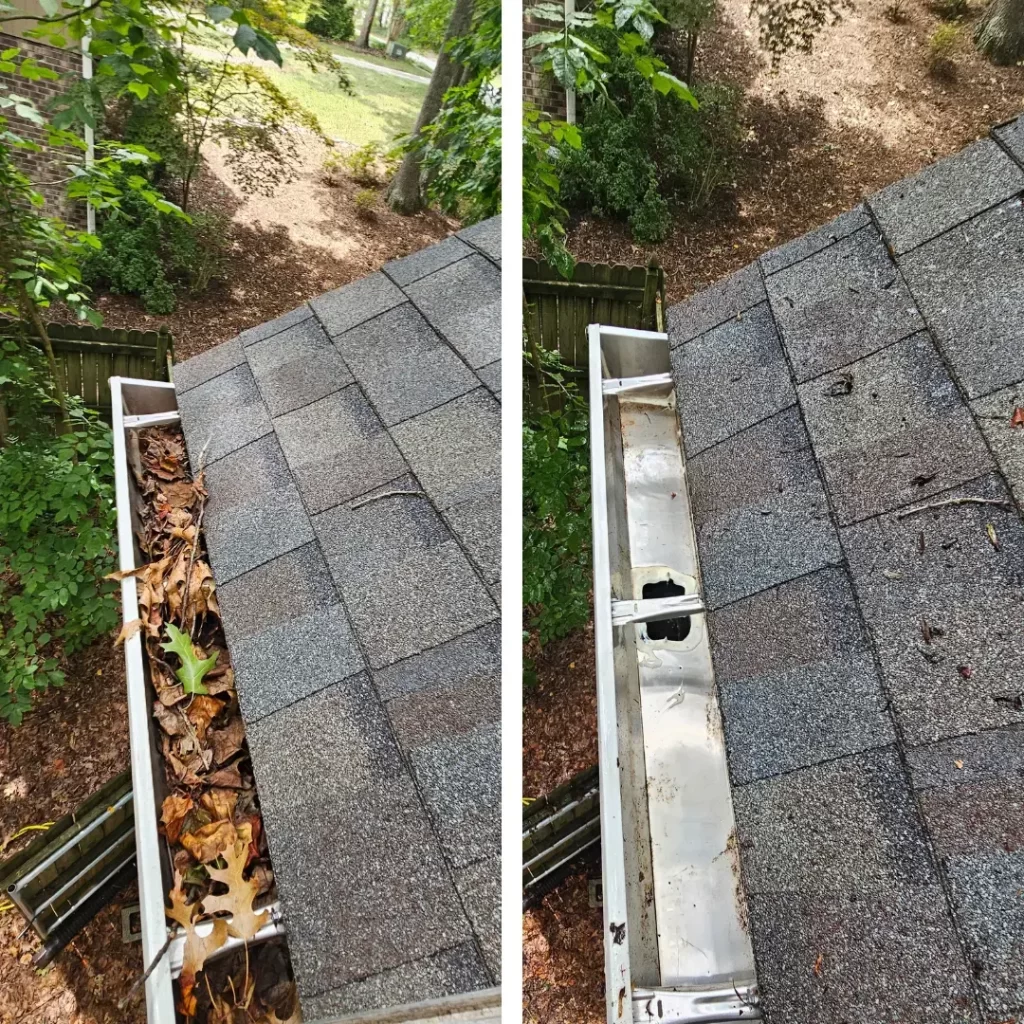
Autumn brings massive volumes of dry needles, leaves, and acorns from the region’s mixed forests. These materials absorb water and add weight to gutter systems, increasing the chance of sagging, fascia rot, or system detachment. Debris buildup in fall also sets the stage for winter ice dams. Cleaning in late November or early December prepares your home for sub-zero nights and snow accumulation.
How to Know It’s Time to Clean Your Gutters
Recognizing early signs of gutter failure helps Colorado Springs homeowners prevent water damage, soil destabilization, and roof system failure. Below are the most reliable indicators that your gutters require immediate cleaning and inspection:
1. Water Overflow During Rainfall
If water spills over the gutter edge instead of exiting through the downspouts, your system is clogged. In elevated neighborhoods like Peregrine or Broadmoor, this overflow accelerates foundation erosion, crawlspace moisture buildup, and hillside runoff damage.
2. Sagging or Pulling Away From the Roofline
Gutters that droop or detach from the fascia board are overloaded with debris or standing water. This added strain compromises structural anchors and can result in soffit damage, bracket shearing, or full collapse, especially in freeze-prone elevations.
3. Vegetation or Plant Growth
Pine needles and decomposed organic debris collect in Colorado Springs gutters and often create a micro-ecosystem. Visible moss, weeds, or sprouts indicate months of blockage and high moisture retention conditions ideal for rot and pest nesting.
4. Visible Debris or “Tiger Stripes”
If leaves, twigs, or sludge are visible from the ground or if black vertical stains appear along gutter faces, it signals long-term overflow. These “tiger stripes” are left behind by stagnant, sediment-heavy water, a frequent problem in homes under tall pines or aspens.
5. Mold, Mildew, or Algae on Siding or Roof
Organic growth near your gutters points to persistent moisture and poor drainage. In Colorado Springs’ variable climate, roof algae or siding mildew can spread rapidly, leading to shingle decay or wood rot.
6. Soil Erosion or Pooling Water Near the Foundation
If you notice standing water, sinkholes, or soil separation near the base of your home, your gutters are failing to redirect runoff at least 3–5 feet away. This is especially concerning in areas with granular soil or shallow foundation depth.
7. Insect or Animal Activity
Mosquitoes, ants, or birds around your roofline often indicate stagnant water or nesting material inside clogged gutters. Colorado Springs’ urban-wildland interface makes this a common entry point for rodents or birds seeking warm, wet environments.
Suggested Cleaning Schedules for Colorado Springs Homeowners
Your optimal gutter maintenance schedule depends on tree density, roof configuration, and Colorado Springs’ seasonal stressors. Use these frequency tiers to guide proactive care:
Twice-Yearly (Minimum)
When: March–April and November–early December > Best for: Homes with low pine density, flat rooflines, and no history of drainage issues
Three Times Per Year
When: Spring, late June (post-catkin and seed fall), and late autumn > Homes near Blue Spruce, Cottonwood, or Aspen trees, or with aging gutter systems
Quarterly (Every 3 Months)
When: Spring, early summer, fall, and before first snowfall > Best for: Properties with steep-pitch roofs, heavy pine needle accumulation, or past basement seepage
Post-Storm or As-Needed Cleaning
Trigger: After hailstorms, wind events, or fast snowmelt > Why: Storm debris can clog gutters overnight and lead to immediate overflow
What Does Gutter Cleaning Cost in Colorado Springs?
Gutter cleaning in Colorado Springs typically ranges from $212 for smaller homes to $329+ for larger properties, depending on linear footage and how much debris has built up.
Clean Pro Gutter Cleaning in Colorado Springs charges $2 per linear foot, with a minimum fee based on the size of your home.
What’s The Best Gutter Cleaning Service in Colorado Springs?
Known for fast scheduling, reliable results, and our proprietary AquaBlast system, Clean Pro Gutter Cleaning is Colorado Springs’ go-to solution for clearing even the toughest seasonal gutter blockages.
With over 425 verified 5-star reviews from Colorado homeowners and 24 years of experience in the region’s variable climate, our licensed technicians manage everything from spring pollen and seed pod buildup to autumn leaf overload in the Front Range.
✅ Appointments available Monday through Saturday, with service scheduled within 72 hours of booking
✅ Technicians are fully licensed, insured, and locally based in Colorado Springs
✅ Prices start at $212, backed by our 100% satisfaction guarantee
Whether you’re dealing with post-storm runoff, foundation erosion, or ice dam risks during Colorado’s winter swings, Clean Pro Gutter Cleaning delivers expert-level care that protects your home year-round.
Why Choose Clean Pro Gutter Cleaning?
A Personal Promise from Clean Pro’s Owner:
“Homeowners can count on me and my team at Clean Pro for exceptional results. We have been in business since 2001 and served Tens of thousands customer since that time. ”
– Jonathan D. Byrd I, Founder & CEO

Ready to Protect Your Home?
Save Big with Clean Pro Gutter Cleaning Today
Stop worrying about your gutters. Cleanings start at just $212, so everyone can afford it. Get the best gutter cleaning in Colorado Springs, fast and hassle-free. At Clean Pro Gutter Cleaning, we have you covered!