How Often Should Gutters Be Cleaned in Philadelphia?
Most Philadelphia homeowners should clean their gutters at least twice a year, typically during spring and fall. However, homes near mature hardwoods, steeply pitched roofs, or areas with frequent heavy rainfalls, like the Schuylkill Basin region, may require more frequent maintenance.
The U.S. General Services Administration recommends clearing gutter systems of debris biannually to avoid blockages and water damage. According to the U.S. Department of Energy, even a single rainfall can result in thousands of gallons of roof runoff enough to overload an improperly maintained drainage system in minutes.
In this guide, you’ll learn how Philadelphia’s climate conditions, tree cover, and home architecture affect your optimal gutter cleaning schedule.
General Gutter Cleaning Recommendations (US Guidelines)
The U.S. General Services Administration (GSA), alongside multiple federal and industry bodies, recommends biannual gutter cleaning for most homes, ideally once in late spring and again in late fall. These seasons align with Philadelphia’s peak debris cycles: spring pollen and flower drop from maples and oaks, and heavy leaf accumulation from regional hardwoods in autumn.
For homes across the Delaware Valley, this twice-yearly schedule serves as a baseline, not a maximum. GSA technical manuals advise weekly checks during fall’s active leaf drop, and monthly inspections through winter to catch ice dams and snow-induced blockages. After Nor’easters or strong summer storms, immediate post-event inspections are strongly advised.
This recommendation is reinforced by the National Association of Home Builders (NAHB) and the National Roofing Contractors Association (NRCA), who highlight spring/fall cleaning as essential to preventing structural damage from unmanaged roof runoff. In Philadelphia rowhomes and twin-style houses, gutter overflow can impact shared walls, basement waterproofing, and foundation integrity.
Further amplifying the risk, the U.S. Department of Energy estimates that even light rainfall can generate several thousand gallons of roof runoff. Without clean and functional gutters, this water can infiltrate basements or destabilize foundations, particularly in neighborhoods with older masonry or clay-heavy soils like Germantown or South Philly.
While a spring/fall cleaning schedule is a solid national standard, many Philadelphia homes require more. In the sections that follow, we’ll explore how local risk factors such as steep rooflines, tree-dense streets like those in Chestnut Hill, and historic drainage challenges influence your ideal gutter maintenance frequency.
Local Factors That Affect Gutter Cleaning Frequency in Philadelphia
Philadelphia’s climate variability and mature urban canopy directly influence how often gutter systems need to be cleared. While national standards suggest twice-yearly maintenance, regional stressors across Southeastern Pennsylvania often warrant more frequent cleanings to maintain performance and prevent structural damage.
1. Seasonal Weather Extremes
Philadelphia faces abrupt spring thunderstorms and late-summer tropical remnants that can drop multiple inches of rain within hours. Gutters obstructed by sycamore pods, shingle grit, or windblown twigs struggle to drain water efficiently. In winter, freeze-thaw cycles typical of the Mid-Atlantic trap debris in ice, expanding blockages and increasing the potential for ice damming, fascia warping, and soffit leaks.
2. Tree Coverage and Native Species
Neighborhoods with heavy Red Oak and London Plane tree coverage, such as East Falls or Mt. Airy, see extended leaf drop through early winter. Red Oaks shed late, while Plane trees produce dense, fuzzy seed balls that easily block downspouts. Homes near these species may require cleaning three to four times annually to maintain unobstructed flow.
3. Heavy Spring and Summer Rainfall
Philadelphia’s rain-heavy seasons, particularly April through June, and again in late August, place a premium on gutter system readiness. For rowhomes and detached homes alike, these rainfall peaks require mid-season cleanings, especially when complex rooflines or rear-yard trees contribute excess debris.
4. Freeze-Thaw Damage in Winter
During Philadelphia’s fluctuating winter temperatures, water left in blocked gutters freezes overnight and thaws by day. This expansion-contraction cycle degrades seams, warps hangers, and can cause partial gutter detachment. Preventative cleaning in late autumn helps mitigate these risks before temperatures consistently drop.
5. Local Soil and Drainage Risk
Philadelphia’s mixed soil profile, including clay-heavy subsoils in West Philly and Northeast neighborhoods, poses risks when gutters discharge near the foundation. Saturated soil swells against masonry walls, increasing hydrostatic pressure and basement seepage potential. Regular gutter cleanings help control water dispersion and protect below-grade spaces.
6. Debris Type and Weight
Throughout the year, Philadelphia gutters collect varied debris: spring brings tree pollen and sticky seed pods, summer introduces storm-broken branches, and fall contributes saturated leaves. When wet, this material becomes dense and heavy, stressing fasteners and increasing the likelihood of gutter sag or detachment from fascia boards.
How Seasons Influence Gutter Maintenance Needs in Pennsylvania
Philadelphia’s four-season climate creates recurring challenges for residential gutter systems. From winter freeze-thaw damage to spring seed pod accumulation, each season presents distinct stressors that demand proactive maintenance to prevent clogs, water intrusion, and structural deterioration.
Winter: Ice Dams and Structural Stress
Philadelphia winters frequently fluctuate between freezing nights and thawing days. This pattern encourages ice dam formation when clogged gutters trap melting snow. Ice backs up beneath shingles, potentially leaking into attics or wall cavities. The freeze-thaw stress also compromises gutter seams and loosens mounting brackets. Late fall gutter cleaning is critical to reduce this risk before temperatures drop below freezing.
Spring: Rainfall and Seed Pod Accumulation
March through June is Philadelphia’s wettest stretch, with thunderstorms and heavy rains common across the region. Functional gutters are essential to redirect runoff away from foundations and prevent basement seepage. At the same time, London Plane trees and Red Maples release large volumes of seed balls and “helicopters,” which quickly obstruct downspouts if not cleared after pollen season.
Summer: Storm Debris and System Strain
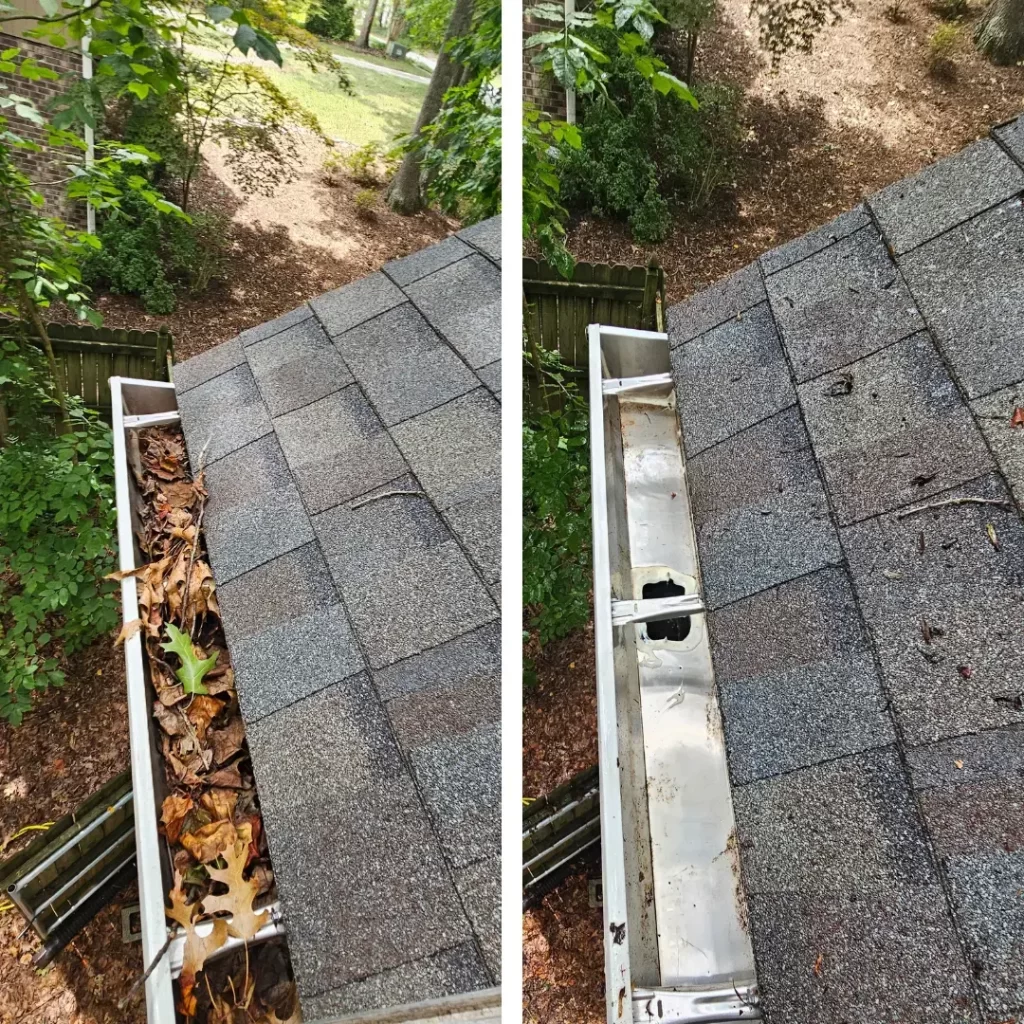
Philadelphia’s summer storms often arrive with gusty winds, hail, and torrential rain. These fast-moving systems scatter twigs, leaves, and roofing grit across rooftops. Even well-maintained gutters from spring can clog after a single event. Mid-summer inspections are recommended for homes in leafy neighborhoods like Mt. Airy or Chestnut Hill, especially where overhanging branches deposit organic debris.
Fall: Leaf Volume and Ice Risk Preparation
Autumn introduces the heaviest organic debris load of the year. Oaks and Sycamores drop saturated leaves and acorns, which absorb water and weigh down gutter channels. If not removed, this buildup creates blockages that freeze in winter, forming the base for ice dams and water intrusion. Cleaning gutters in late November or early December helps prevent structural damage during Philadelphia’s colder months.
How to Know It’s Time to Clean Your Gutters
Identifying early signs of clogged gutters helps Philadelphia homeowners prevent foundation damage, basement leaks, and costly roof deterioration. Below are the most reliable indicators that your gutter system requires immediate cleaning and inspection:
1. Water Overflow During Rainfall
If rainwater spills over the sides of your gutters rather than flowing through the downspouts, it signals a blockage. In Philadelphia neighborhoods with older brick foundations like West Philly or South Philly, overflowing gutters increase the risk of foundation saturation, basement seepage, and yard erosion.
2. Sagging or Pulling Away From the Roofline
When gutters begin to sag or detach from the roofline, it’s often due to excessive weight from trapped debris or stagnant water. This structural load stresses the fasteners and can lead to detachment, especially on historic cornices or decorative eaves found in Philadelphia rowhomes.
3. Vegetation or Plant Growth
If you spot plant growth sprouting from the gutter channel, it means that enough organic matter and moisture have built up to support germination. In Philly’s tree-lined neighborhoods like Mt. Airy or Queen Village, this condition is often a sign of months of neglect.
4. Visible Debris or “Tiger Stripes”
When leaves, twigs, or silt are visible from the ground or if dark vertical lines appear along the face of the gutter, your system is overflowing. These “tiger stripes” are caused by contaminated runoff streaking down the exterior surface, a clear symptom of blockage.
5. Mold, Mildew, or Algae on Siding or Roof
Persistent moisture around gutter areas creates ideal conditions for microbial growth. If you notice algae blooms or mildew patches near the roofline or on siding, it’s likely tied to poor drainage. Left untreated, this can accelerate roof shingle decay and wood rot.
6. Soil Erosion or Pooling Water Near the Foundation
Gutter systems in Philadelphia should direct water at least 3 to 5 feet away from the structure. If you observe cracks in your masonry, muddy areas, or standing water, it’s a sign your drainage system is underperforming, especially in regions with clay-heavy soil like Northeast Philly.
7. Insect or Animal Activity
Stagnant water inside clogged gutters creates breeding grounds for mosquitoes, ants, birds, or rodents. Nesting behavior or unusual pest activity near your roofline is a functional signal that the drainage path is obstructed.
Suggested Cleaning Schedules for Philadelphia Homeowners
Your ideal gutter cleaning frequency in Philadelphia depends on factors like tree density, roof complexity, and seasonal weather conditions. Use the schedule below to align maintenance with regional risks and home-specific attributes:
Twice-Yearly (Minimum)
When: Late March–early April & Late November–early December > Homes in areas with minimal overhanging tree cover (e.g., new developments in Northeast Philly) and no history of water overflow or foundation issues
Three Times Per Year
When: Early spring, late June (after maple and plane tree seed drop), and mid-to-late fall > Homes surrounded by London Planes, Red Maples, or with aging gutter systems commonly found in West Philly or Germantown
Quarterly (Every 3 Months)
When: Spring, early summer, fall, and pre-winter (November) > Best for: Properties with dense canopy coverage, multi-tiered or steep rooflines, or a history of basement flooding or siding damage
Post-Storm or As-Needed Cleaning
Trigger: Following heavy rain, thunderstorms, or wind events typical of Philadelphia’s spring and late-summer weather patterns > Why: Gutters can clog overnight from dislodged branches, shingle grit, and airborne debris. Immediate post-storm inspections help prevent overflow and structural damage
What Does Gutter Cleaning Cost in Philadelphia?
The average cost of gutter cleaning in Philadelphia ranges from $206 for smaller rowhomes to over $329 for larger detached properties, depending on total linear footage and debris volume.
In Philadelphia, Clean Pro Gutter Cleaning typically charges $2 per linear foot, with a minimum fee adjusted based on home size and accessibility.
What’s The Best Gutter Cleaning Service in Philadelphia?
Clean Pro Gutter Cleaning is Philadelphia’s most trusted gutter maintenance provider, recognized for rapid scheduling, reliable outcomes, and its proprietary AquaBlast system engineered to eliminate even the heaviest seasonal debris.
With over 425 five-star reviews from local homeowners and 24 years of regional experience, our licensed Philadelphia-based technicians clear everything from spring seed drop to autumn leaf buildup. Each service includes a full gutter flush, downspout inspection, and water flow performance test to ensure year-round protection across the city’s varied weather cycles.
✅ Appointments available Monday through Saturday, with service scheduled within 72 hours
✅ Fully licensed, insured, and locally based professionals serving all Philadelphia zip codes
✅ Prices start at $206, backed by a 100% satisfaction guarantee
Whether you’re managing post-storm overflow in Mt. Airy, runoff issues in South Philly, or preparing for winter ice dam conditions, Clean Pro delivers expert gutter cleaning in Philadelphia that preserves roof, siding, and foundation integrity through every season.
Why Choose Clean Pro Gutter Cleaning?
A Personal Promise from Clean Pro’s Owner:
“Homeowners can count on me and my team at Clean Pro for exceptional results. We have been in business since 2001 and served Tens of thousands customer since that time. ”
– Jonathan D. Byrd I, Founder & CEO

Ready to Protect Your Home?
Save Big with Clean Pro Gutter Cleaning Today
Stop worrying about your gutters. Cleanings start at just $206, so everyone can afford it. Get the best gutter cleaning in Philadelphia, fast and hassle-free. At Clean Pro Gutter Cleaning, we have you covered!