How Often Should Gutters Be Cleaned in Waterbury?
Waterbury homeowners should clean their gutters at least twice per year, once in spring and again in fall, to prevent clogs and water damage. However, homes located near mature trees, with steeply pitched roofs, or exposed to frequent rainfall may require cleaning every 3–4 months. Seasonal debris from New England maple, oak, and birch trees, along with Waterbury’s freeze-thaw cycles, increases blockage risks.
The U.S. General Services Administration recommends biannual gutter clearing to prevent structural damage. Backed-up gutters can cause overflow that saturates foundations, roofs, and walls. Even moderate rainfall of about 1 inch on a 1,000 sq ft roof can yield over 600 gallons of runoff, according to the U.S. Department of Energy. Without clear gutters, this water can pool near the foundation or leak into basements, especially in older Waterbury homes with limited perimeter drainage.
This guide explains how Waterbury’s weather patterns, regional foliage, and architectural profiles determine your optimal gutter maintenance frequency.
General Gutter Cleaning Recommendations (US Guidelines)
The U.S. General Services Administration (GSA), supported by leading building and roofing authorities, recommends Waterbury homeowners clean their gutters at least twice a year, once in late spring and again in late fall. These intervals align with seasonal debris peaks: spring seed pods and blossoms, and autumn’s heavy leaf fall from Connecticut’s dense hardwood canopy.
However, Waterbury’s climate and geography demand additional vigilance. GSA technical standards advise weekly gutter checks during the peak fall leaf-drop season, and monthly inspections throughout winter to detect snow-related blockages and ice dams common in the city’s freeze-prone months. Post-storm inspections are also essential, especially after heavy rainfall or nor’easters.
Industry leaders like the National Association of Home Builders (NAHB) and the National Roofing Contractors Association (NRCA) reinforce the spring/fall cleaning standard as a baseline, noting its effectiveness in preventing overflow-related damage to siding, roofing, and foundation structures.
Further emphasizing this point, the U.S. Department of Energy reports that even a light rainfall of just one inch can produce over 600 gallons of runoff on a 1,000-square-foot roof. In Waterbury’s older neighborhoods, where many homes feature shallow perimeter drainage or aging foundations, unmanaged runoff can lead to basement seepage, erosion, and mold growth.
While the twice-a-year guideline serves as a national benchmark, Waterbury’s mature tree coverage, sloped roofing architecture, and variable weather patterns often necessitate a more customized maintenance schedule.
Local Factors That Affect Gutter Cleaning Frequency in Waterbury
Waterbury’s fluctuating climate and dense mix of native trees introduce localized challenges that affect how frequently homeowners should clean their gutters. While national standards recommend two cleanings per year, Waterbury’s environmental conditions frequently demand a more proactive approach.
1. Seasonal Weather Extremes
Waterbury experiences powerful spring rainstorms and heavy summer cloudbursts, sometimes dumping multiple inches of rain in a single event. These high-intensity downpours can overwhelm even partially clogged gutter systems. In winter, fluctuating temperatures cause freeze-thaw cycles that turn trapped debris into hardened blockages, escalating the risk of ice dams and soffit damage.
2. Tree Coverage and Native Species
Homes surrounded by native Sugar Maples, Red Oaks, or Eastern Hemlocks face continual debris exposure. Sugar Maples release dense leaves in late fall, Red Oaks retain their foliage through winter, and Hemlocks shed needles year-round. Residences under or near these species often require quarterly gutter maintenance to avoid chronic clogs.
3. Heavy Spring and Summer Rainfall
From April through July, Waterbury experiences its wettest months. Frequent rain events coincide with spring bloom debris and early summer twig fallout. Homes with complex roofing geometry or shaded lots benefit from mid-season inspections and potential cleanouts to maintain proper flow.
4. Freeze-Thaw Damage in Winter
When debris prevents water from draining, it freezes overnight and expands, putting stress on gutter seams, hangers, and fascia boards. In Waterbury’s cold months, these repeated freeze-thaw cycles can split hardware, cause gutter separation, or create leak paths toward the foundation.
5. Local Soil and Drainage Risk
Waterbury’s underlying glacial till and clay-heavy soils expand when saturated. Overflowing gutters that spill near the foundation contribute to hydrostatic pressure, leading to basement seepage and structural risk. Regular gutter cleaning plays a critical role in preserving long-term foundation stability.
6. Debris Type and Weight
Gutter debris in Waterbury varies seasonally: spring pollen and maple samaras, summer twigs and storm fragments, and fall’s waterlogged oak leaves. Once saturated, these materials become dense and heavy, increasing strain on mounting hardware and leading to sagging or full detachment.
How Seasons Influence Gutter Maintenance Needs in Connecticut
Waterbury’s four-season climate poses consistent and evolving threats to gutter systems. With heavy rainfall, freeze-thaw cycles, and mature New England tree cover, each season introduces distinct stressors that increase the likelihood of clogs, water damage, and repair costs. Understanding these seasonal risks is essential for preventative maintenance.
Winter: Ice Dams and Structural Stress
Waterbury winters alternate rapidly between freezing and thawing, creating ideal conditions for ice dams. When gutters are clogged, melting snow refreezes and forces water beneath shingles, leading to leaks and ceiling damage. Repeated freeze-thaw cycles also strain seams, brackets, and fasteners, resulting in sagging or partial gutter detachment. Clearing gutters before mid-December reduces these structural risks.
Spring: Rainfall and Seed Pod Accumulation
From April through June, Waterbury receives heavy rainfall, making efficient drainage essential. Blocked gutters during this period can lead to overflow and foundation saturation. Local tree species like Sugar Maples and Red Oaks release pollen, blossoms, and seed pods in spring, commonly clogging downspouts. Post-bloom cleanouts are critical to maintaining flow during the wettest months.
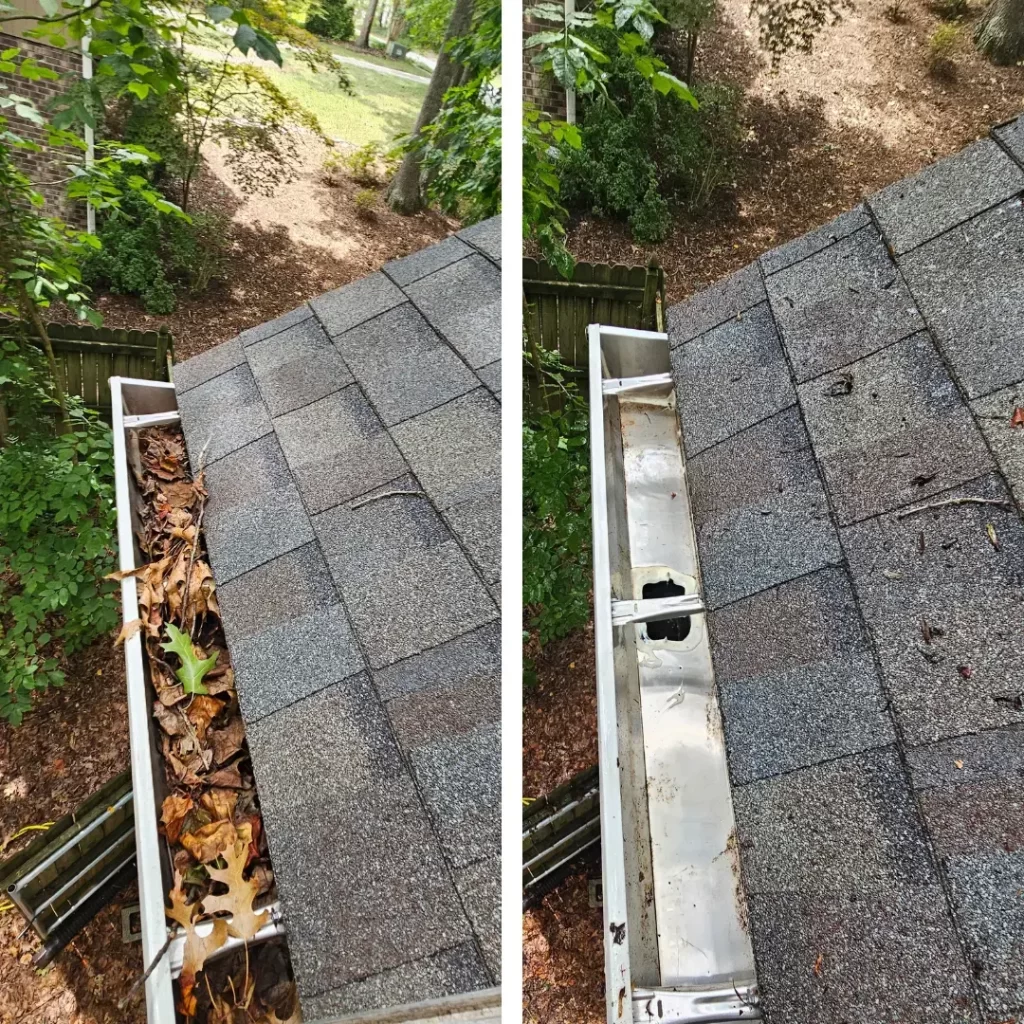
Summer: Storm Debris and System Strain
Waterbury summers bring intense thunderstorms and wind-driven debris. Even recently cleaned gutters can quickly become obstructed after a single storm. Properties with complex rooflines or surrounded by dense canopy benefit from mid-summer inspections to remove storm debris and ensure continued water flow.
Fall: Leaf Volume and Ice Risk Preparation
Autumn is the most demanding season for Waterbury gutters. Oaks, Maples, and Birches shed large volumes of leaves, needles, and acorns that retain moisture and compress into dense, gutter-clogging mats. Unaddressed debris accelerates rust, seam separation, and increases winter ice dam risk. Cleaning by late November helps protect against cold-weather failures.
How to Know It’s Time to Clean Your Gutters
Detecting early signs of clogged gutters can help Waterbury homeowners prevent roof leaks, basement flooding, and structural damage. Below are the most reliable indicators that your gutter system requires cleaning or inspection.
1. Water Overflow During Rainfall
If water spills over the edge of your gutters instead of draining through downspouts during rainfall, it signals a blockage. In Waterbury’s hilly neighborhoods and clay-heavy soils, this overflow can lead to basement seepage, soil displacement, and exterior foundation damage.
2. Sagging or Pulling Away From the Roofline
Visible drooping or gaps between the gutter and roofline indicate excess weight, typically from soaked leaves, ice, or compacted sludge. This stress can cause brackets to fail, leading to gutter detachment and potential damage to soffits or siding.
3. Vegetation or Plant Growth
If you see weeds, moss, or small plants sprouting from your gutters, it means organic buildup and trapped moisture have created a soil-like environment. This often indicates that gutters haven’t been cleaned in several seasons.
4. Visible Debris or “Tiger Stripes”
Twigs, leaves, or sediment visible from ground level are a clear sign of obstruction. Dark vertical marks commonly known as “tiger stripes” suggest that dirty water has been consistently overflowing and staining your gutter system.
5. Mold, Mildew, or Algae on Siding or Roof
Persistent moisture from overflowing gutters can lead to mold and algae growth on Waterbury home exteriors. Besides being unsightly, this can compromise roofing materials and cause siding to rot over time.
6. Soil Erosion or Pooling Water Near the Foundation
Gutters should channel water at least 3 to 5 feet away from the home. If you see erosion channels, cracks, or pooling around your foundation, your drainage system is not functioning correctly, posing long-term structural risk.
7. Insect or Animal Activity
Waterbury’s wooded lots attract pests. If you notice birds, rodents, ants, or mosquitoes near your gutters, it’s likely due to standing water or accumulated debris. These nests further clog the system and exacerbate overflow problems.
Suggested Cleaning Schedules for Waterbury Homeowners
Your optimal gutter cleaning frequency in Waterbury depends on roof design, surrounding vegetation, and the city’s seasonal weather cycles. Follow these evidence-based intervals to prevent clogs and drainage issues:
Twice-Yearly (Minimum)
When: March–April and November–December > Best for: Waterbury homes with sparse tree coverage and no history of drainage problems\
Three Times Per Year
When: Spring, late June (after seed pod drop), late fall > Best for: Homes near Sugar Maples, Red Oaks, or properties with older gutter systems prone to clogs
Quarterly (Every 3 Months)
When: Spring, summer, early fall, and pre-winter > Best for: Waterbury homes with steep-pitched roofs, heavy tree canopy, or previous water intrusion around the foundation or basement
Post-Storm or As-Needed Cleaning
Trigger: After thunderstorms, hail, or high-wind events > Why: Storms deposit branches, seed pods, and roof granules that clog gutters in a single day
What Does Gutter Cleaning Cost in Waterbury?
The average gutter cleaning prices range from $206for smaller homes to over $329 for larger properties, depending on total linear footage and the extent of debris buildup.
In Waterbury, Clean Pro Gutter Cleaning charges $2 per linear foot, with a minimum service fee that scales by home size.
What’s The Best Gutter Cleaning Service in Waterbury?
Clean Pro Gutter Cleaning is Waterbury’s most trusted choice for fast, reliable gutter maintenance featuring our proprietary AquaBlast system designed to remove even the toughest seasonal debris, from spring pollen buildup to dense autumn leaf loads.
With over 425 five-star reviews and 24 years of regional expertise, our licensed technicians provide thorough service that includes a full debris flush, downspout inspection, and water flow validation, ensuring your gutters perform through Connecticut’s heavy rains, snowmelt, and freeze-thaw cycles.
✅ Appointments available Monday through Saturday, with service scheduled within 72 hours of booking
✅ Fully licensed and insured local technicians based right here in Waterbury
✅ Pricing starts at $206, backed by our 100% satisfaction guarantee
Whether you’re dealing with foundation runoff, storm-related clogging, or winter ice dam threats, Clean Pro delivers year-round protection for your home’s drainage system with results you can count on.
Why Choose Clean Pro Gutter Cleaning?
A Personal Promise from Clean Pro’s Owner:
“Homeowners can count on me and my team at Clean Pro for exceptional results. We have been in business since 2001 and served Tens of thousands customer since that time. ”
– Jonathan D. Byrd I, Founder & CEO

Ready to Protect Your Home?
Save Big with Clean Pro Gutter Cleaning Today
Stop worrying about your gutters. Cleanings start at just $206, so everyone can afford it. Get the best gutter cleaning in Waterbury, fast and hassle-free. At Clean Pro Gutter Cleaning, we have you covered!