How Often Should Gutters Be Cleaned in Boise?
Most Boise homeowners should schedule gutter cleaning at least twice a year, once in the spring and once in the fall. However, properties near mature cottonwoods, maples, or evergreens, as well as homes with steep rooflines or exposure to seasonal windstorms, may need more frequent cleanings to stay protected.
According to the U.S. General Services Administration, gutters must be cleared of debris biannually to prevent overflow, roof deterioration, and foundation issues. The U.S. Department of Energy also emphasizes that even light rainfall in mountainous or high desert regions like Boise can produce thousands of gallons of runoff, which can overwhelm poorly maintained gutters.
In this guide, we’ll explore how Boise’s climate patterns, regional vegetation, and common roof configurations affect how often you should clean your gutters.
General Gutter Cleaning Recommendations (US Guidelines)
The U.S. General Services Administration (GSA) and major industry bodies recommend cleaning gutters at least twice per year, once in late spring and again in late fall. These timeframes align with Boise’s seasonal debris cycles, spring pollen and seed drop from cottonwoods and pines, followed by autumn leaf fall from ash, maple, and locust trees.
The GSA’s technical guidance advises weekly inspections during peak fall leaf drop, especially in neighborhoods like the Boise North End and East Foothills, where tree density increases clog risk. In winter months, monthly checks help detect ice buildup, snow obstructions, or sagging gutters caused by the city’s freeze-thaw fluctuations. Following strong windstorms or snowmelt events, immediate gutter inspections are necessary to prevent water damage.
National standards from the National Association of Home Builders (NAHB) and the National Roofing Contractors Association (NRCA) also back this biannual cleaning schedule. Their focus is consistent: protect structural components like roofs, fascia, siding, and home foundations by maintaining uninterrupted water flow.
The U.S. Department of Energy notes that just one inch of rainfall on a 1,000-square-foot Boise roof can produce over 600 gallons of runoff. Without clear gutters and downspouts, this water can collect near foundations, leading to soil displacement, basement seepage, or foundation cracks, especially in Boise’s clay-rich soils prone to expansion and erosion.
While twice-yearly cleaning serves as a national minimum, Boise homeowners may need more frequent maintenance. In the next section, we’ll examine how local variables, like roof pitch, wind-driven debris from the foothills, and microclimates in forested neighborhoods, increase your optimal cleaning frequency and preventive strategies.
Local Factors That Affect Gutter Cleaning Frequency in Boise
Gutter maintenance frequency in Boise depends on regional climate patterns, local vegetation, and soil responsiveness to moisture. While national recommendations suggest two cleanings per year, Boise’s dry summers, leaf-heavy autumns, and mountain-proximity weather require more responsive scheduling.
1. Seasonal Weather Extremes
Boise’s spring showers and occasional summer cloudbursts can deposit large volumes of rain within short periods. If gutters are blocked by pine needles, cottonwood fluff, or roof grit, they overflow quickly, leading to fascia damage and basement seepage. In winter, freeze-thaw cycles from cold nights and mild days often trap debris inside expanding ice, creating clogs and structural strain.
2. Tree Coverage and Native Species
Homes near cottonwoods, elms, and ponderosa pines, especially in the North End, Warm Springs Avenue, or Harrison Boulevard areas, face persistent debris fall from early spring to late autumn. Cottonwoods drop thick fluff and twigs, elms shed samaras, and pines contribute resinous needles year-round. In these zones, 3–5 cleanings per year may be required to maintain proper flow.
3. Heavy Spring and Summer Rainfall
The Boise River Basin sees intense snowmelt in late spring, often followed by localized thunderstorms. Homes with steep rooflines, older gutters, or shaded valleys are at higher risk for overflow and water backup during these months. Mid-to-late spring inspections help ensure system readiness before peak runoff.
4. Freeze-Thaw Damage in Winter
Gutters clogged in the fall may retain water that freezes overnight, expands, and damages joints and fasteners. Daytime thaws worsen the effect, weakening the mounts and allowing water to pool at the eaves or foundation. Pre-winter clearing is critical in Boise’s December–February freeze window.
5. Local Soil and Drainage Risk
Much of Boise’s subsoil is composed of expansive clay that swells when waterlogged. Blocked gutters can discharge near the home’s perimeter, increasing foundation pressure, especially in older neighborhoods without modern grading. Clean gutters help route water safely away, preserving structural integrity and basement dryness.
6. Debris Type and Weight
Boise’s seasonal debris profile changes sharply throughout the year. Spring brings sticky pollen and samaras, summer adds storm-shed branches, and fall deposits wet, heavy leaves from neighborhood elms and maples. When saturated, this debris becomes dense and strains brackets, increasing the risk of gutters sagging or pulling away from fascia boards.
How Seasons Influence Gutter Maintenance Needs in Idaho
Idaho’s four distinct seasons each pose unique challenges to residential gutter systems, particularly in cities like Boise, where dry summers, foothill runoff, cold winters, and leaf-heavy autumns converge. Understanding these seasonal patterns helps homeowners prevent clogs, water damage, and long-term structural issues.
Winter: Ice Dams and Structural Stress
Idaho winters are marked by frequent freeze-thaw cycles, especially in the Treasure Valley. When gutters are obstructed, melted snow refreezes overnight, creating ice dams that can force water beneath shingles or loosen gutter brackets. Snowpack melt from the foothills adds to the moisture load. A thorough cleaning before the first hard freeze in late November helps prevent cold-season damage.
Spring: Rainfall and Seed Pod Accumulation
Spring in southern Idaho begins with snowmelt from the foothills and rain showers in March through May. Trees like cottonwoods, elms, and maples release pollen strings, catkins, and samaras (“helicopters”), which accumulate quickly in gutters. These materials form dense, fibrous clogs that are difficult to remove once wet. Early spring cleaning ensures your gutter system can handle both runoff and organic debris.
Summer: Storm Debris and System Strain
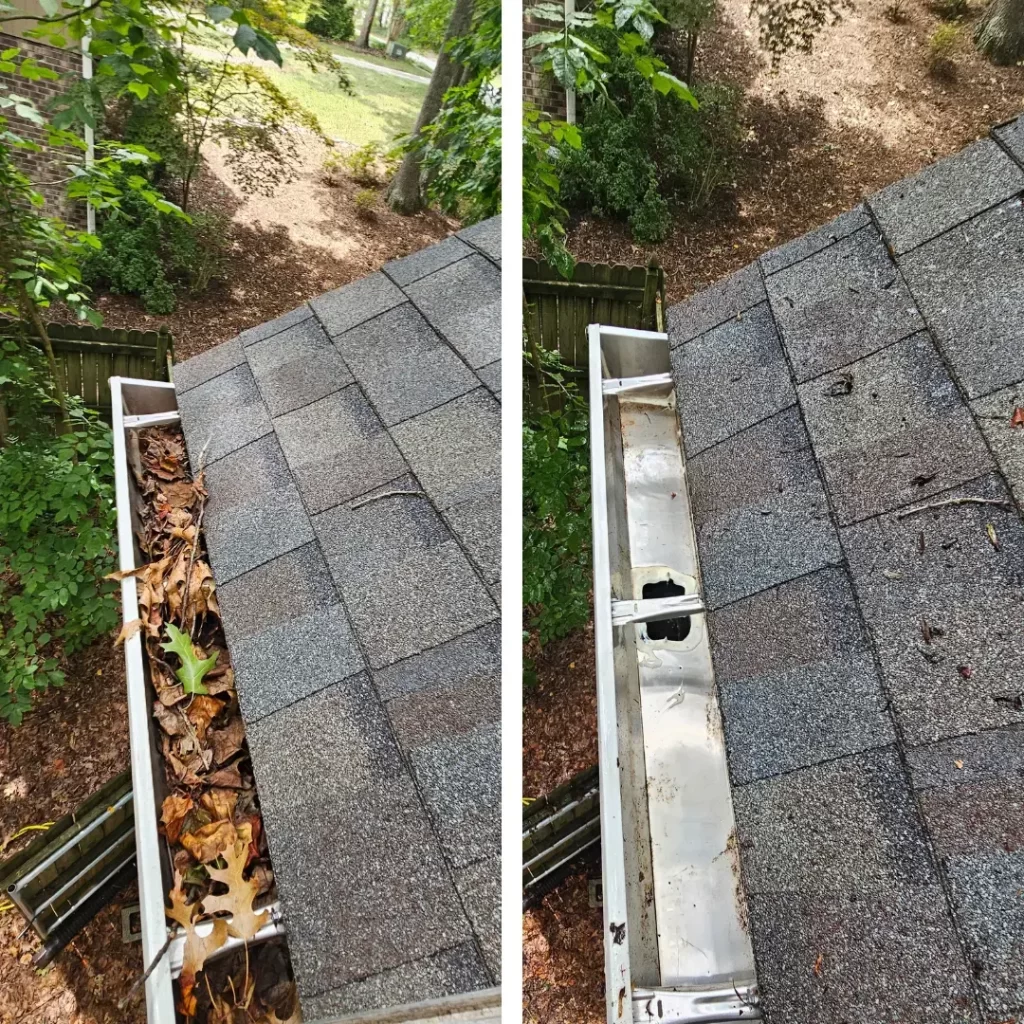
While Idaho’s summers are typically dry, windstorms and thunderstorms can bring sudden bursts of rain and airborne debris. Dry leaves, pine needles, and granules from aging shingles can accumulate rapidly. Homes near mature evergreens or exposed ridgelines are especially vulnerable. A mid-summer inspection ensures that early storm debris doesn’t go unchecked.
Fall: Leaf Volume and Ice Risk Preparation
Autumn is Idaho’s heaviest gutter load season, with maples, cottonwoods, and ash trees shedding large amounts of dry and water-absorbing leaves. When rain arrives in October or early November, this debris absorbs moisture and compresses, increasing the risk of gutter sagging and overflow. A final late fall cleaning prepares the system for winter ice formation and runoff management.
How to Know It’s Time to Clean Your Gutters
Boise homeowners can avoid costly foundation movement, siding decay, and roof leaks by identifying the early signs of clogged gutter systems. Below are the clearest indicators that your gutters need immediate cleaning:
1. Water Overflow During Rainfall
If rainwater spills over the gutter edge instead of exiting through downspouts, your gutters are blocked. Boise’s sudden spring storms and snowmelt surges make this a key warning sign. Overflow near the base of your home increases the risk of soil washout and concrete shifting.
2. Sagging or Pulling Away From the Roofline
Gutters pulling away from the roofline are overloaded with wet organic debris or ice buildup. In Boise’s freeze-thaw winters, this strain can detach sections, damage soffits, and rot wooden fascia boards.
3. Vegetation or Plant Growth
The presence of weeds, moss, or saplings growing from gutters means enough organic material and moisture have accumulated to support plant life. This condition often indicates months of neglect.
4. Visible Debris or “Tiger Stripes”
Boise’s cottonwoods, elms, and maples drop seeds that germinate quickly. If you see weeds, moss, or small saplings sprouting from the gutter channel, it signals months of neglected buildup and enough organic material to retain constant moisture.
5. Mold, Mildew, or Algae on Siding or Roof
Biological growth near gutter lines results from standing water and improper drainage. Boise’s shaded rooflines and wood siding are especially susceptible. Mold indicates excess moisture, which accelerates roof deck deterioration and siding rot.
6. Soil Erosion or Pooling Water Near the Foundation
If water is pooling within 2–3 feet of your home or you notice soft soil, trenching, or foundation cracking, your downspouts are not dispersing water properly. Boise’s clay-loam soils, common in areas like the Bench and North End, are prone to swelling under moisture pressure.
7. Insect or Animal Activity
Rodents, birds, mosquitoes, and ants often infest neglected gutter systems. Boise’s dry summers make stagnant water inside clogged gutters an ideal breeding zone. If you hear scratching or see nests near the roofline, it’s time to clean.
Suggested Cleaning Schedules for Boise Homeowners
In Boise, your ideal gutter cleaning frequency depends on your tree density, roof slope, and exposure to seasonal windstorms and snowmelt. Use these localized guidelines:
Twice-Yearly (Minimum)
When: March–April and November–December > Best for: Homes in newer subdivisions with minimal tree cover and no history of drainage issues.
Three Times Per Year
When: April, late June (after elm and maple seed fall), early November > Best for: Homes near cottonwoods, elms, or aging gutter systems
Quarterly (Every 3 Months)
When: Spring, summer, fall, and just before snow season > Best for: Properties with dense tree canopy, multi-level roofs, or prior foundation water intrusion
Post-Storm or As-Needed Cleaning
Trigger: After wind events, hail, or late-summer dry lightning storms > Why: Sudden microbursts can dump pine needles, roof grit, and twigs into gutters overnight
What Does Gutter Cleaning Cost in Boise?
Professional gutter cleaning typically costs between $214 and $329, depending on home size, roof height, and the amount of debris involved.
In Boise, Clean Pro Gutter Cleaning typically charges $2 per linear foot, with a minimum service fee that varies based on the size of the home.
What’s The Best Gutter Cleaning Service in Boise?
Clean Pro Gutter Cleaning is Boise’s most trusted gutter maintenance service, known for fast turnarounds, high-effort results, and its proprietary AquaBlast system, which clears even dense blockages caused by Boise’s seasonal debris.
With over 185 five-star reviews from Boise-area homeowners and 24 years of service across Idaho, Clean Pro’s licensed gutter technicians manage everything from spring cottonwood seed buildup to heavy fall leaf loads. Every cleaning includes a full gutter flush, downspout pressure inspection, and drainage flow test, ensuring your system stays clear during Boise’s storm bursts, snowmelt surges, and freeze-thaw cycles.
✅ Appointments available Monday through Saturday, with cleanings typically scheduled within 72 hours
✅ Licensed and insured technicians who live and work in Boise
✅ Flat-rate pricing starts at $214, backed by a 100% satisfaction guarantee
Whether you’re dealing with storm-driven debris, foundation runoff, or ice dam risks, Clean Pro Gutter Cleaning provides year-round protection for homes.
Why Choose Clean Pro Gutter Cleaning?
A Personal Promise from Clean Pro’s Owner:
“Homeowners can count on me and my team at Clean Pro for exceptional results. We have been in business since 2001 and served Tens of thousands customer since that time. ”
– Jonathan D. Byrd I, Founder & CEO

Ready to Protect Your Home?
Save Big with Clean Pro Gutter Cleaning Today
Stop worrying about your gutters. Cleanings start at just $214, so everyone can afford it. Get the best gutter cleaning in Boise, fast and hassle-free. At Clean Pro Gutter Cleaning, we have you covered!