How Often Should Gutters Be Cleaned in Fayetteville?
Most Fayetteville homeowners need to clean their gutters twice a year, once in spring and once in fall. If your home is near mature trees, has sharply sloped roofing, or is exposed to heavy rainfall during certain seasons, more frequent gutter cleaning is necessary to prevent overflow and water damage.
The U.S. General Services Administration advises clearing gutters twice a year to prevent clogging and structural water damage. Just a few inches of rainfall can produce several thousand gallons of roof runoff, according to the U.S. Department of Energy, more than enough to overwhelm poorly maintained gutter systems.
This guide explains how Fayetteville’s weather patterns, prevalent tree types, and typical home designs determine the optimal gutter cleaning schedule.
General Gutter Cleaning Recommendations (US Guidelines)
The U.S. General Services Administration (GSA), along with leading federal and industry organizations, recommends a baseline of biannual gutter cleaning for Fayetteville homes, once in late spring and again in late fall. These intervals correspond to peak debris events: spring flower drops and seed pods, followed by autumn leaf accumulation.
In Fayetteville, GSA technical documentation recommends more frequent gutter inspections under specific conditions. Weekly checks during fall are advised when trees are actively shedding leaves. In winter, monthly gutter inspections help detect ice dams or snow blockages. After heavy storms or high winds, immediate inspections are critical to prevent drainage failures and water damage.
This spring–fall cleaning standard is also endorsed by the National Association of Home Builders (NAHB) and the National Roofing Contractors Association (NRCA) as a national benchmark. Their guidance emphasizes preserving the structural integrity of roofs, siding, and foundations by ensuring uninterrupted water flow through gutter systems.
The U.S. Department of Energy adds an environmental warning: even minor rain events can create thousands of gallons of roof runoff. If gutters are clogged or misaligned, this runoff may infiltrate basements or cause foundation erosion, increasing long-term structural risk.
While twice-a-year gutter maintenance is a nationally accepted standard, Fayetteville’s environmental profile may call for more frequent cleanings. In the next section, we examine how mature tree coverage, storm frequency, roof pitch, and local soil composition (notably clay-rich terrain) impact the optimal gutter cleaning schedule for your Fayetteville property.
Local Factors That Affect Gutter Cleaning Frequency in Fayetteville
Fayetteville’s variable climate and dense tree canopy introduce specific environmental stressors that directly influence optimal gutter cleaning frequency. While national standards suggest biannual maintenance, Fayetteville homeowners often require more frequent service to mitigate risks tied to regional weather, native flora, and soil composition.
1. Seasonal Weather Extremes
Fayetteville frequently experiences intense spring and summer storms, with several inches of rainfall occurring in short time frames. If gutters are obstructed by seed pods, roof granules, or twigs, these storms can cause immediate overflow. In winter, freeze–thaw cycles trap debris in ice, worsening clogs and increasing the chance of ice dams or structural leaks.
2. Tree Coverage and Native Species
Properties shaded by Fayetteville’s native Red Maples and White Oaks face chronic clogging risks. Red Maples shed winged seeds (samaras) in large volumes during spring, while White Oaks retain dead leaves through winter, gradually releasing them into gutters. In such conditions, three to four cleanings per year may be necessary.
3. Heavy Spring and Summer Rainfall
From May through August, Fayetteville sees its heaviest rain activity. Mid-season gutter inspections are critical for homes with steep roof angles, complex valleys, or tall perimeter trees. Storm-driven winds can rapidly load gutters with debris, compounding the risk of backup and overflow during peak rainfall periods.
4. Freeze-Thaw Damage in Winter
When trapped water freezes inside clogged gutters during Fayetteville’s cold spells, it expands and strains joints, hangers, and seams. As daytime temperatures rise, thawing causes contraction, eventually leading to cracks, gutter separation, and water infiltration. Clearing gutters before winter is essential to protect rooflines and siding from freeze-induced damage.
5. Local Soil and Drainage Risk
Fayetteville sits atop clay-heavy soils that expand significantly when soaked. When clogged gutters discharge water near the home, hydrostatic pressure builds around the foundation. Routine gutter maintenance ensures efficient runoff diversion, reducing the risk of slab shifts, moisture ingress, or basement flooding.
6. Debris Type and Weight
Gutter debris in Fayetteville changes with the seasons. Spring introduces pollen clusters and maple seeds, summer storms drop limbs and shingle grit, and fall loads gutters with heavy, moisture-saturated oak leaves. When soaked, this material adds substantial weight, stressing the gutter’s fasteners and increasing the chance of sagging or detachment.
How Seasons Influence Gutter Maintenance Needs in North Carolina
North Carolina’s four-season climate presents ongoing challenges for gutter systems, especially in Fayetteville, where dense tree cover, freeze–thaw cycles, and heavy rainfall converge. Recognizing these seasonal stressors is essential to prevent clogs, foundation erosion, and costly water-related damage.
Winter: Ice Dams and Structural Stress
Fayetteville winters often alternate between overnight freezing temperatures and mild daytime thaws. This fluctuation promotes ice dam formation, especially when snowmelt becomes trapped in clogged gutters. As runoff backs up, it can seep under shingles, leading to roof leaks and interior water intrusion. The repeated freeze–thaw cycle also stresses gutter seams, brackets, and fasteners, raising the risk of gutter detachment or collapse. A late-fall cleaning is critical to prevent these winter hazards.
Spring: Rainfall and Seed Pod Accumulation
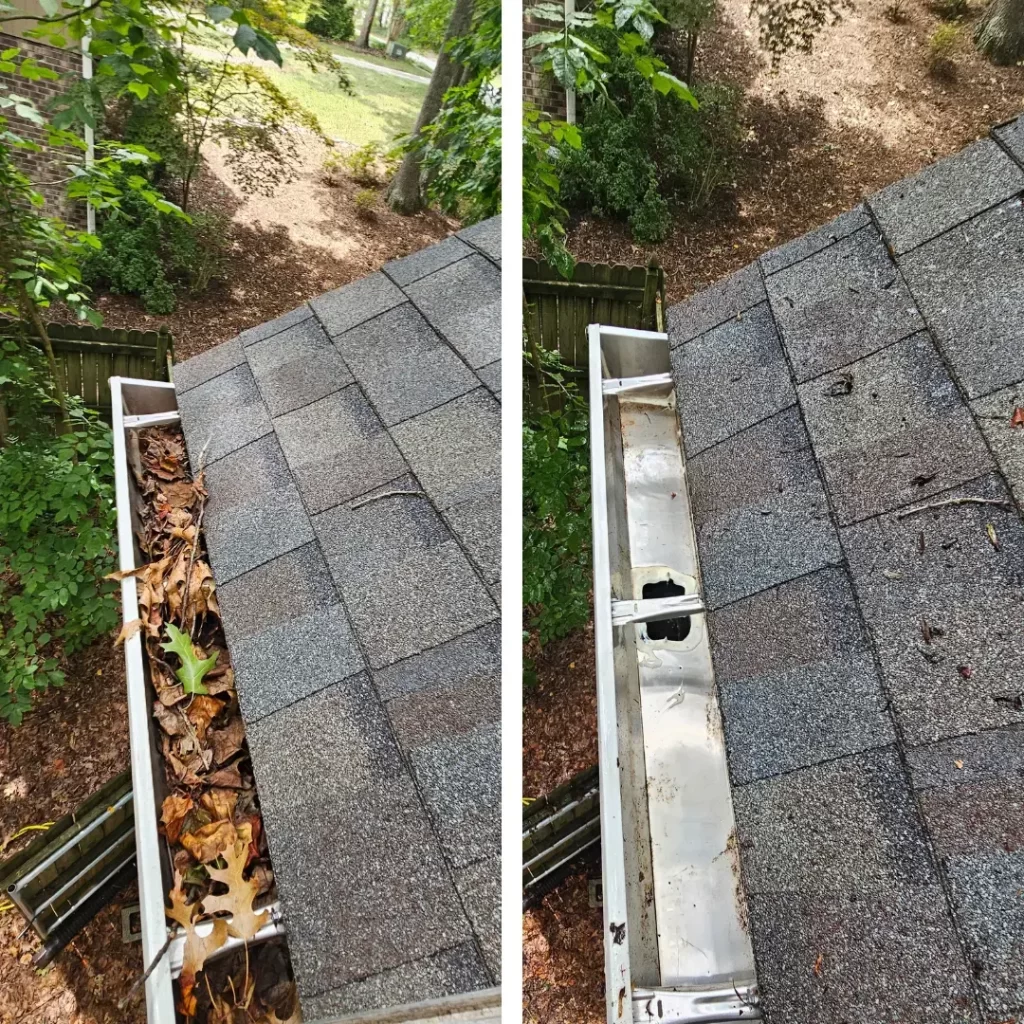
Spring ushers in Fayetteville’s peak rainfall season, particularly from March through June. Gutters must remain clear to safely divert high water volumes away from the foundation. Native trees like Red Maples and Sweetgum release samaras and seed pods in late spring, which can rapidly clog downspouts. Early-season cleanouts ensure systems remain functional and prevent foundation erosion and early overflow events.
Summer: Storm Debris and System Strain
Fayetteville summers often bring severe thunderstorms, marked by high winds, intense rain, and airborne debris. Even gutters recently cleaned in spring can be overwhelmed after a single summer storm. Homes with steep roofs, valley gutters, or mature tree canopies are particularly at risk. Mid-summer inspections help detect and remove storm-borne blockages before they cause overflow or physical stress on the system’s structure.
Fall: Leaf Volume and Ice Risk Preparation
Fall in Fayetteville produces the year’s heaviest accumulation of organic debris. Trees like White Oaks and Hickories shed leaves, acorns, pine needles, and twigs. Once saturated, this material becomes water-heavy, increasing gutter weight and potential for sagging. If left unchecked, this debris retains moisture, increasing the likelihood of ice damming in early winter. A final cleaning in November or early December helps maintain structural integrity and prepares gutters for freeze-thaw cycles common in North Carolina winters.
How to Know It’s Time to Clean Your Gutters
Recognizing the early signs of clogged gutters helps Fayetteville homeowners prevent foundation damage, roof leaks, and costly structural repairs. Below are the most reliable indicators that your gutter system requires immediate attention:
1. Water Overflow During Rainfall
If water pours over the edge of the gutters rather than exiting through the downspouts, a severe clog is likely. In Fayetteville’s storm-prone spring and summer seasons, this overflow often leads to foundation saturation, basement dampness, and soil erosion near walkways or flower beds.
2. Sagging or Pulling Away From the Roofline
Gutters that sag or detach from the fascia are usually burdened by compacted debris or trapped water. This excess weight stresses the system and can cause hardware failure, damage to eaves and soffits, and in some cases, full detachment during heavy storms.
3. Vegetation or Plant Growth
If you spot moss, weeds, or sprouting plants inside your gutters, it means moisture and organic buildup have been sitting for weeks. Fayetteville’s humid climate, especially in spring and fall, accelerates this type of growth, creating an ideal habitat for pests and blockages.
4. Visible Debris or “Tiger Stripes”
Leaves, twigs, and sediment visible from ground level signal an obstructed system. Dark streaks on the outer gutter face (known as tiger stripes) are a result of dirty water spilling over repeatedly, leaving behind mineral deposits and stains.
5. Mold, Mildew, or Algae on Siding or Roof
Persistent moisture from clogged gutters promotes biological growth. In Fayetteville’s moisture-rich environment, algae and mildew often form along roof edges, soffits, or siding, leading to material deterioration and cosmetic damage.
6. Soil Erosion or Pooling Water Near the Foundation
Properly functioning gutters should discharge water at least 3–5 feet away from the home. If you observe puddling, displaced mulch, or cracked clay soil around your home’s perimeter, your system may be failing to manage runoff, increasing hydrostatic pressure near the foundation.
7. Insect or Animal Activity
Standing water and organic debris attract unwanted pests. In Fayetteville’s warm seasons, clogged gutters become prime nesting or breeding grounds for mosquitoes, ants, birds, and even rodents. Frequent pest sightings in or near your gutters may indicate stagnant conditions inside.
Suggested Cleaning Schedules for Fayetteville Homeowners
Your optimal gutter cleaning schedule in Tulsa depends on three main factors: tree density, roof configuration, and the city’s seasonal storm patterns. Use the following guidelines to determine the right frequency for your home:
Twice-Yearly (Minimum)
When: March–April and November–December > Best for: Fayetteville homes with minimal tree coverage, no history of drainage problems, and simple or low-slope rooflines
Three Times Per Year
When: Early spring, late June (after seed drop), and late fall > Best for: Homes near Red Maples, Sweetgums, or equipped with aging gutters commonly found in mid-century Fayetteville neighborhoods
Quarterly (Every 3 Months)
When: Spring, summer, fall, and pre-winter (late November) > Best for: Properties with steep-pitched roofs, dense tree canopies, or a history of water intrusion, gutter overflow, or ice dam formation
Post-Storm or As-Needed Cleaning
Trigger: Immediately after severe windstorms or heavy rainfall events > Why: Fayetteville’s seasonal thunderstorms can rapidly load gutters with twigs, leaves, and roofing debris, often leading to immediate clogs and overflow if left uninspected
What Does Gutter Cleaning Cost in Fayetteville?
The average cost for professional gutter cleaning ranges from approximately $212 for smaller homes to over $329 for larger properties. Pricing depends on the total linear footage of gutters and the severity of debris buildup, such as compacted leaves, seed pods, or storm-related blockages.
In Fayetteville, Clean Pro Gutter Cleaning typically charges around $2 per linear foot, with minimum service thresholds based on the size and height of the home.
What’s The Best Gutter Cleaning Service in Fayetteville?
Clean Pro Gutter Cleaning is Fayetteville’s most trusted gutter maintenance provider, delivering fast scheduling, durable results, and our proprietary AquaBlast system that clears even the most stubborn seasonal clogs.
With over 425 five-star reviews and 24 years of experience, our licensed local technicians handle everything from spring seed pod buildup to heavy fall leaf blockages. Every service includes a full gutter flush, downspout inspection, and water flow test, ensuring your system functions year-round through North Carolina’s unpredictable weather cycles.
✅ Appointments available Monday through Saturday, with most cleanings scheduled within 72 hours of booking
✅ Fully licensed and insured professionals who live and work in the Fayetteville area
✅ Pricing starts at just $212, backed by a 100% satisfaction guarantee
Whether you’re dealing with storm-driven overflow, foundation runoff, or ice dam risk during Fayetteville’s winter freeze-thaw cycles, Clean Pro delivers expert seasonal protection to keep your home safeguarded, every month of the year.
Why Choose Clean Pro Gutter Cleaning?
A Personal Promise from Clean Pro’s Owner:
“Homeowners can count on me and my team at Clean Pro for exceptional results. We have been in business since 2001 and served Tens of thousands customer since that time. ”
– Jonathan D. Byrd I, Founder & CEO

Ready to Protect Your Home?
Save Big with Clean Pro Gutter Cleaning Today
Stop worrying about your gutters. Cleanings start at just $212, so everyone can afford it. Get the best gutter cleaning in Fayetteville, fast and hassle-free. At Clean Pro Gutter Cleaning, we have you covered!