How Often Should Gutters Be Cleaned in Jersey City?
Most homes in Jersey City require gutter cleaning at least twice a year, once in the spring and again in the fall. However, properties with large tree coverage, steep-pitched roofs, or those located in flood-prone areas may need more frequent service due to faster debris buildup and stormwater volume.
According to the U.S. General Services Administration, gutters should be cleared of debris biannually to prevent overflow and structural damage. The U.S. Department of Energy highlights that even light rainfall can produce thousands of gallons of rooftop runoff. If your gutters are clogged, this runoff can lead to foundation saturation, basement leaks, and landscape erosion.
In this guide, you’ll learn how Jersey City’s weather patterns and residential roof types shape your ideal gutter cleaning frequency and why following a proactive maintenance schedule protects your property year-round.
General Gutter Cleaning Recommendations (US Guidelines)
The U.S. General Services Administration (GSA), along with various federal and construction authorities, recommends a foundational gutter cleaning schedule of every six months, typically once in late spring and again in late autumn. These intervals align with peak debris accumulation: spring brings blossoms and seed pods, while fall delivers heavy leaf drop.
In addition to this base schedule, the GSA’s technical bulletins advise more frequent inspections under specific conditions. For example, weekly checks are recommended during peak fall shedding, while monthly inspections in winter help detect early ice damming. Gutter systems should also be examined immediately after major storms.
The National Association of Home Builders (NAHB) and National Roofing Contractors Association (NRCA) also recognize the spring/fall model as an industry standard for protecting fascia boards, siding, and foundations from unmanaged runoff.
Adding to the urgency, the U.S. Department of Energy emphasizes that even light rainfall can release thousands of gallons of water from rooftops. If gutters are obstructed, this water can spill over and compromise basements or erode soil near the foundation.
While biannual gutter cleaning offers a solid national starting point, homeowners in Jersey City may need more frequent servicing. In the following sections, we’ll evaluate how Hudson County’s tree canopy, Northeast storm events, and tight-lot urban drainage affect your ideal gutter maintenance routine.
Local Factors That Affect Gutter Cleaning Frequency in Jersey City
Jersey City’s dense urban forestry, coastal humidity, and unpredictable Nor’easters create unique conditions that directly influence how often gutters should be cleaned. While national standards recommend semi-annual maintenance, local environmental variables in Hudson County often call for more frequent service intervals.
1. Seasonal Weather Extremes
Spring and summer in Jersey City bring strong thunderstorms, often dumping inches of water within hours. Gutters blocked by granules, twigs, or street-level debris can overflow rapidly, increasing the risk of basement flooding and foundation erosion. Late-season tropical systems and Nor’easters only amplify the volume.
2. Tree Coverage and Native Species
Many neighborhoods in Jersey City, like The Heights and Bergen-Lafayette, feature mature trees such as London Plane Trees and Red Maples. These species shed heavily in both spring and fall. Helicopter seeds in May and dense leaf drop in October-November frequently clog gutters, requiring 3–4 cleanings per year in tree-dense zones.
3. Heavy Spring and Summer Rainfall
Warm months bring intense humidity and short-burst downpours that fill gutters quickly. Combined with street dust and wind-blown debris, these weather patterns accelerate clogs, especially in homes with flat or low-slope roofs.
4. Freeze-Thaw Damage in Winter
While Jersey City winters are milder than inland regions, freeze-thaw cycles still occur regularly. Water trapped in gutters freezes overnight, then thaws during the day, stressing seams, brackets, and joints. Without proactive fall cleaning, these shifts can cause detachment or ice-related roof leaks.
5. Local Soil and Drainage Risk
Much of Jersey City sits atop silt-heavy and compacted fill soils, which are vulnerable to oversaturation. Clogged gutters that overflow near the home’s perimeter can lead to foundation instability and standing water problems in small yards or tight-lot properties.
6. Debris Type and Weight
Seasonal gutter debris isn’t just organic. Urban wind carries roofing granules, soot, construction dust, and even plastic packaging into gutters. When mixed with wet leaves or pollen sludge, this material becomes extremely dense, adding strain to mounting systems and increasing the likelihood of sagging or collapse.
How Seasons Influence Gutter Maintenance Needs in New Jersey
New Jersey’s four-season climate brings a range of environmental stressors that can overload residential gutter systems. From coastal storms to urban tree debris, each season introduces distinct challenges. Understanding these patterns is essential for preventing blockages, runoff damage, and costly structural repairs.
Winter: Ice Dams and Structural Stress
Although Jersey City winters aren’t the coldest in the Northeast, fluctuating temperatures lead to ice dams when snowmelt refreezes in clogged gutters. These blockages can redirect water under shingles or toward siding, causing leaks and mold. Freeze-thaw pressure also weakens gutter seams and fasteners—making late fall cleaning crucial.
Spring: Rainfall and Seed Pod Accumulation
From March to June, Jersey City sees heavy spring rainfalls that demand fully functioning gutters. In addition to water volume, urban trees like Red Maples and London Planes drop pollen clusters and seed pods often forming dense mats in gutter troughs. Spring cleanouts are essential to handle this dual threat.
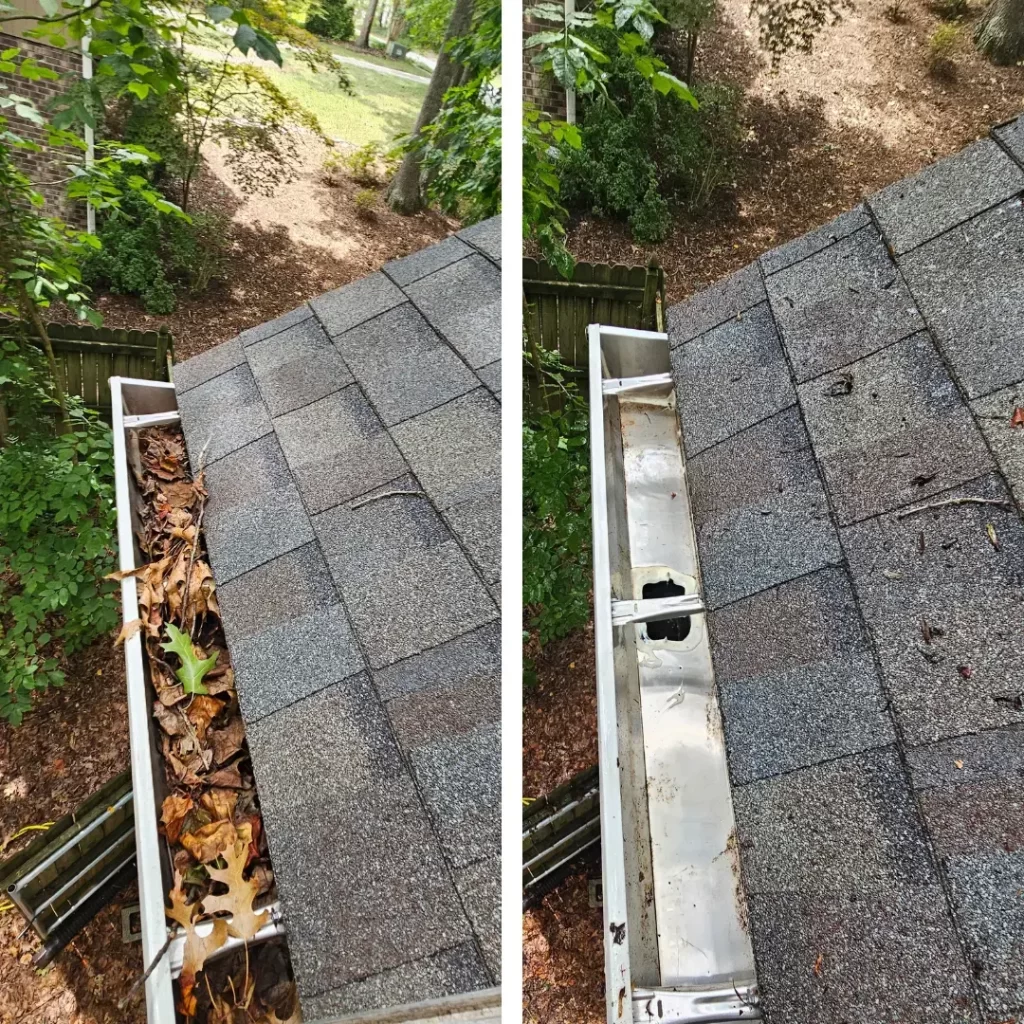
Summer: Storm Debris and System Strain
Summer brings frequent thunderstorms and coastal system remnants, which can dislodge roofing granules, twigs, and litter. Even homes cleaned in spring may experience new blockages after a single event. Gutter inspections in mid- to late summer help ensure proper flow during hurricane season peaks.
Fall: Leaf Volume and Ice Risk Preparation
Autumn presents the heaviest debris load of the year. Deciduous trees in areas like Hamilton Park or Greenville shed vast quantities of leaves, needles, and acorns, especially after windy days. When soaked, this material becomes heavy and traps moisture, leading to sagging gutters and winter ice risk. A late-November cleaning helps prepare homes for the cold months ahead.
How to Know It’s Time to Clean Your Gutters
Identifying the signs of clogged or malfunctioning gutters early can help Jersey City residents avoid foundation damage, basement leaks, and costly exterior repairs. Below are the key indicators that your gutters need immediate attention:
1. Water Overflow During Rainfall
If water is spilling over the sides of your gutters during rainfall instead of flowing freely through the downspouts, this signals a blockage. In urban areas like The Heights or Journal Square, this overflow can flood sidewalks, saturate foundations, or erode landscaping.
2. Sagging or Pulling Away From the Roofline
When gutters begin to droop or detach from the fascia board, it often means they’re burdened with debris buildup or standing water. This added weight can damage soffits, siding, and the structural integrity of the gutter system itself.
3. Vegetation or Plant Growth
If you see grass, moss, or small plants sprouting from your gutters, it means there’s enough moist organic matter to sustain growth, usually a sign of long-term neglect and poor water drainage.
4. Visible Debris or “Tiger Stripes”
Leaves, twigs, or sediment visible from ground level, as well as vertical gray or black streaks along your gutter exteriors, indicate overflow. These “tiger stripes” are caused by polluted water repeatedly spilling over the edge.
5. Mold, Mildew, or Algae on Siding or Roof
Persistent moisture from overflowing gutters promotes mold, mildew, and algae along the fascia, siding, and even the roof. This growth is not only a visual issue; it threatens the long-term durability of your home’s materials.
6. Soil Erosion or Pooling Water Near the Foundation
Water should be diverted at least 3 to 5 feet from your home’s base. If you notice puddles, cracks, or shifting soil near your foundation, your gutters may be leaking or overflowing. In neighborhoods with older infrastructure, this can quickly turn into basement flooding or structural instability.
7. Insect or Animal Activity
Gutters filled with damp organic debris provide ideal breeding grounds for mosquitoes, ants, and other insects. Birds, squirrels, and even rodents can nest in clogged sections, creating further blockages and sanitation risks.
Suggested Cleaning Schedules for Jersey City Homeowners
The ideal gutter cleaning routine in Jersey City depends on several hyper-local factors, including tree density, roof configuration, and seasonal storm activity. Use the following breakdown to determine your optimal maintenance frequency:
Twice-Yearly (Minimum)
When: Late March – early April and mid-November – early December > Best for: Homes in urban neighborhoods with minimal surrounding tree coverage and no history of drainage issues.
Three Times Per Year
When: Spring, late June (after tree pollen and seed fall), and late autumn > Best for: Properties near mature Maples, Oaks, or Sycamores that drop heavy seasonal debris.
Quarterly (Every 3 Months)
When: Spring, summer, fall, and just before winter > Best for: Homes where dense tree cover, steep roofing angles, or past water infiltration have been issues.
Post-Storm or As-Needed Cleaning
Trigger: After Nor’easters, thunderstorms, or high-wind events > Why: Heavy weather can overwhelm gutters in just one storm, especially if debris like seed pods, twigs, or roofing granules accumulate rapidly.
What Does Gutter Cleaning Cost in Jersey City?
In Jersey City, gutter cleaning typically ranges from $212 for smaller residential properties to over $329 for larger homes, depending on factors like linear footage, debris type, and roof accessibility.
In Jersey City, Clean Pro Gutter Cleaning charges a standard rate of $2 per linear foot, with a minimum service fee that scales with home size and layout complexity.
What’s The Best Gutter Cleaning Service in Jersey City?
Clean Pro Gutter Cleaning is Jersey City’s most trusted choice for professional gutter maintenance, known for fast scheduling, lasting results, and its proprietary AquaBlast system that clears even compacted seasonal debris.
With more than 300 five-star reviews from New Jersey homeowners and over two decades of regional experience, our licensed technicians tackle everything from spring pollen buildup to autumn leaf congestion. Each service includes a complete gutter and downspout flush, drainage testing, and structural inspection, ensuring peak performance through Jersey City’s rainy seasons.
✅ Appointments available Monday–Saturday, typically within 72 hours of booking
✅ Fully insured, licensed technicians who live and work in the Jersey City area
✅ Transparent pricing starting at $212, backed by a 100% satisfaction guarantee
Whether you’re experiencing rooftop runoff, storm overflow, or foundation drainage issues, Clean Pro delivers responsive and reliable service that protects your home year-round.
Why Choose Clean Pro Gutter Cleaning?
A Personal Promise from Clean Pro’s Owner:
“Homeowners can count on me and my team at Clean Pro for exceptional results. We have been in business since 2001 and served Tens of thousands customer since that time. ”
– Jonathan D. Byrd I, Founder & CEO

Ready to Protect Your Home?
Save Big with Clean Pro Gutter Cleaning Today
Stop worrying about your gutters. Cleanings start at just $212, so everyone can afford it. Get the best gutter cleaning in Jersey City, fast and hassle-free. At Clean Pro Gutter Cleaning, we have you covered!