How Often Should Gutters Be Cleaned in Joliet?
Most Joliet homeowners should plan to clean their gutters at least twice a year, typically once in spring and once again in fall. However, homes located near mature oak, maple, or pecan trees, or those with steep rooflines or frequent exposure to Midwest thunderstorms, may require more frequent maintenance.
According to the U.S. General Services Administration, gutter systems must be cleared of debris a minimum of two times per year to prevent water overflow and foundation damage. The U.S. Department of Energy further notes that even light rainfall can produce thousands of gallons of roof runoff, more than enough to overwhelm a clogged or poorly maintained system.
In this guide, we’ll explore how Joliet’s seasonal weather patterns, regional tree cover, and common residential roof styles influence your optimal gutter cleaning schedule and frequency.
General Gutter Cleaning Recommendations (US Guidelines)
The U.S. General Services Administration (GSA), along with several federal and industry authorities, recommends a baseline of biannual gutter cleaning, ideally once in late spring and again in late fall. These windows align with peak debris accumulation: seed pods and blossoms in the spring, and heavy leaf fall during autumn.
However, the GSA’s technical maintenance guidance also calls for heightened vigilance in certain conditions. Weekly gutter checks are advised during peak leaf-drop months in the fall, while monthly inspections in winter help catch ice dams or frozen obstructions. Following major weather events, especially in regions like northern Illinois, an immediate visual inspection is recommended to assess debris buildup.
Both the National Association of Home Builders (NAHB) and the National Roofing Contractors Association (NRCA) reinforce this spring/fall schedule as a national best practice. Their goal is to prevent water-related damage to roofing, siding, and foundation systems.
The U.S. Department of Energy adds that even moderate rainfall can create thousands of gallons of roof runoff. If gutters or downspouts are blocked, this water may pool around the foundation or seep into basements, posing serious structural risks.
Although twice-yearly cleaning provides a strong baseline, it may not be sufficient for homes in Joliet with mature trees, steep rooflines, or exposure to seasonal storms and snow loads. In the following sections, we’ll explore Joliet-specific environmental factors that may influence your optimal gutter maintenance schedule.
Local Factors That Affect Gutter Cleaning Frequency in Joliet
Joliet’s Midwest climate and suburban tree coverage create specific environmental conditions that directly influence how often your gutters should be cleaned. While national recommendations advise twice-yearly maintenance, localized factors in northern Illinois often require more frequent attention.
1. Seasonal Weather Extremes
Joliet experiences strong spring and summer storms that often bring heavy rainfall and wind-driven debris. In just one thunderstorm, leaves, twigs, and roof granules can clog your gutter system. During winter, freeze-thaw cycles are common and can cause ice dams that stress or damage gutter seams and fasteners. Regular maintenance before and after these seasonal extremes is essential.
2. Tree Coverage and Native Species
Yards in Joliet often feature mature Pin Oaks, Red Maples, and Silver Maples, which are known for heavy seasonal shedding. Silver Maples release “helicopters” in spring, and Oaks drop leaves well into early winter. If your home is near these species, expect to clean your gutters at least three times per year to stay ahead of clogs.
3. Heavy Spring and Summer Rainfall
From late April through August, Joliet experiences frequent downpours. This season overlaps with active foliage growth and seed drop. Gutters need to operate at full capacity to divert sudden water surges away from the home. A mid-summer cleaning can prevent overflow issues caused by accumulated organic matter.
4. Freeze-Thaw Damage in Winter
Trapped water in neglected gutters can freeze overnight, then expand and contract with daily temperature shifts. This process weakens seams and can lead to sagging gutters or water leaks near the foundation. Late fall cleaning is critical to reduce this winter risk.
5. Local Soil and Drainage Risk
The clay-rich soil in Will County expands significantly when saturated. Blocked gutters that discharge water too close to the foundation worsen this effect, increasing the likelihood of basement leaks and structural pressure. Ensuring gutters drain away from the foundation helps protect against these soil-related risks.
6. Debris Type and Weight
Debris types vary throughout the year: spring brings pollen and seed pods, summer adds broken twigs and storm residue, and fall introduces water-logged leaves. This organic material becomes heavy when wet and can strain gutter brackets and screws, leading to detachment or sagging if not cleared out regularly.
How Seasons Influence Gutter Maintenance Needs in Illinois
Illinois’s four distinct seasons each introduce unique risks to residential gutter systems, especially in cities like Joliet where heavy rainfall, freeze-thaw cycles, and mature tree cover converge. Understanding these seasonal stressors is essential to preventing clogs, water damage, and costly repairs.
Winter: Ice Dams and Structural Stress
Illinois winters frequently swing between freezing and thawing temperatures, leading to ice dams that form when clogged gutters trap snowmelt. These blockages can force water under shingles, resulting in roof leaks and interior damage. The freeze-thaw cycle also stresses gutter seams and mounting brackets, often causing gutters to sag or detach. Fall maintenance is critical to prevent this winter hazard.
Spring: Rainfall and Seed Pod Accumulation
Spring marks the onset of Illinois’s rainy season, with March through June delivering intense downpours. Clean gutters are vital to channel this sudden water volume away from the foundation. Additionally, local trees like Silver Maples and Pin Oaks drop seed pods and “helicopters” during late spring, which can create stubborn clogs if not cleared promptly.
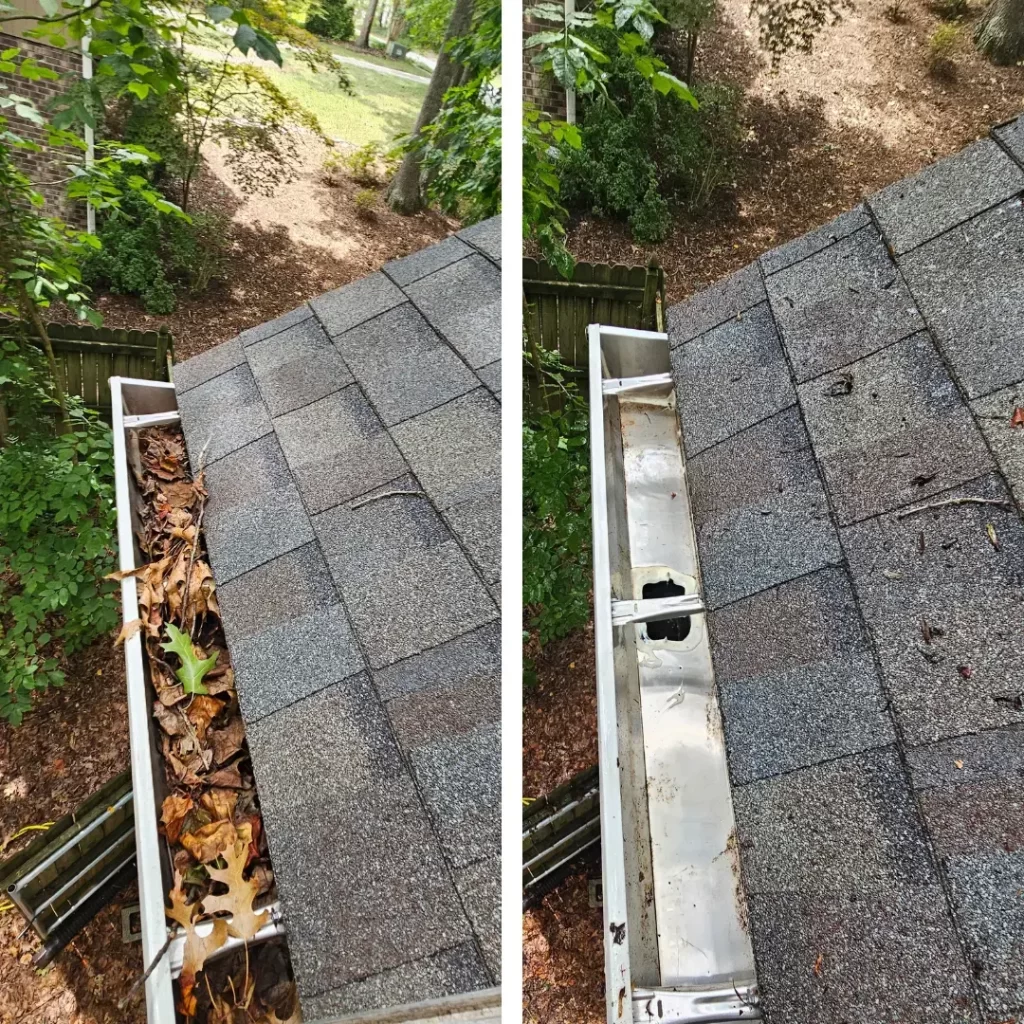
Summer: Storm Debris and System Strain
Thunderstorms in Illinois’s summer months frequently bring high winds, heavy rain, and airborne debris. Even gutters cleaned in spring can become clogged again within a single event. Mid-summer inspections help catch storm-related buildup before it causes overflow, especially for homes with dense tree coverage or multi-level rooflines.
Fall: Leaf Volume and Ice Risk Preparation
Autumn delivers the heaviest debris load of the year. Illinois’s deciduous trees shed massive volumes of leaves, pine needles, and acorns, which saturate quickly and weigh down gutter systems. If left uncleared, this debris traps moisture, increasing the risk of winter ice dams and structural damage. Cleaning in late November or early December ensures readiness for winter’s challenges.
How to Know It’s Time to Clean Your Gutters
Spotting early signs of clogged gutters can help Joliet homeowners avoid costly repairs related to water intrusion, foundation shifting, and roof damage. Below are the most consistent indicators that your gutter system needs attention:
1. Water Overflow During Rainfall
If rainwater spills over the gutter edges instead of draining through the downspouts, it likely means there’s a clog. In Joliet, this can lead to basement leaks, yard erosion, or water pooling near the foundation, especially during spring storms or snowmelt.
2. Sagging or Pulling Away From the Roofline
Gutters that bow or pull away from the fascia are often overloaded with debris or standing water. In Joliet’s variable climate, this added weight puts stress on mounting hardware, increasing the risk of detachment and damage to roof eaves or siding.
3. Vegetation or Plant Growth
If you see grass, moss, or even small saplings growing from your gutters, it means that organic material and moisture have accumulated for weeks or months. This is common in neighborhoods with mature trees like Black Walnuts or Maples.
4. Visible Debris or “Tiger Stripes”
Debris visible from the ground, such as twigs, leaves, or roof granules, indicates that your gutters are full. “Tiger stripes,” or dark streaks running down the gutter face, are also signs of overflow from accumulated grime and water runoff.
5. Mold, Mildew, or Algae on Siding or Roof
Mold or green algae near roof eaves often signals poor gutter drainage. With Joliet’s summer humidity, this can accelerate decay on shingles, fascia boards, and vinyl siding.
6. Soil Erosion or Pooling Water Near the Foundation
Improper gutter drainage can lead to washed-out landscaping or cracks forming in Joliet’s clay-heavy soil. If water isn’t being directed at least 3 to 5 feet away from the foundation, your gutters aren’t functioning properly.
7. Insect or Animal Activity
Stagnant water inside clogged gutters attracts pests like mosquitoes, ants, and even nesting birds or squirrels. Insects often breed in warm months, turning your gutter system into a hidden infestation zone.
Suggested Cleaning Schedules for Joliet Homeowners
The optimal gutter cleaning frequency in Joliet depends on your home’s tree density, roof design, and seasonal weather exposure. The following schedules reflect local climate trends and property profiles:
Twice-Yearly (Minimum)
When: March–April and November–December > Best for: Homes with minimal foliage, flat lots, and no history of drainage issues
Three Times Per Year
When: Early spring, late June (post-helicopter drop), and late fall > Best for: Properties near Silver Maples, Pin Oaks, or homes with aging gutter systems
Quarterly (Every 3 Months)
When: Spring, summer, fall, pre-winter > Best for: Homes with steep-pitched roofs, thick tree canopy, or prior water damage
Post-Storm or As-Needed Cleaning
Trigger: Post-thunderstorm or wind gusts > Why: Even a single storm can clog gutters overnight with twigs, roof granules, and leaf fragments, especially in neighborhoods with mature hardwoods
What Does Gutter Cleaning Cost in Joliet?
Gutter cleaning prices in Joliet typically range from $212 for smaller properties to $329 or more for larger homes, depending on factors like total linear footage, debris buildup, and roof accessibility.
In Joliet, Clean Pro Gutter Cleaning offers a transparent pricing model of $2 per linear foot, with a minimum charge based on your home’s size.
What’s The Best Gutter Cleaning Service in Joliet?
Clean Pro Gutter Cleaning is Joliet’s top-rated gutter cleaning company, trusted by local homeowners for fast service, long-lasting results, and advanced removal methods, including the proprietary AquaBlast system that eliminates even the toughest seasonal clogs.
With over 165 five-star reviews and 24 years of experience in the Midwest, our licensed technicians are equipped to handle everything from springtime seed debris to autumn leaf buildup. Every Clean Pro service includes a complete gutter flush, downspout inspection, and water flow test, ensuring your gutters remain clear through Illinois’ unpredictable weather.
✅ Available Monday through Saturday with service scheduled within 72 hours of booking
✅ Fully licensed and insured professionals who live and work in the Joliet area
✅ Pricing starts at just $212, backed by a 100% satisfaction guarantee
Whether you’re dealing with overflow after a thunderstorm, foundation pooling, or signs of ice damming, Clean Pro provides expert care that protects your home throughout every season.
Why Choose Clean Pro Gutter Cleaning?
A Personal Promise from Clean Pro’s Owner:
“Homeowners can count on me and my team at Clean Pro for exceptional results. We have been in business since 2001 and served Tens of thousands customer since that time. ”
– Jonathan D. Byrd I, Founder & CEO

Ready to Protect Your Home?
Save Big with Clean Pro Gutter Cleaning Today
Stop worrying about your gutters. Cleanings start at just $212, so everyone can afford it. Get the best gutter cleaning in Joliet, fast and hassle-free. At Clean Pro Gutter Cleaning, we have you covered!