How Often Should Gutters Be Cleaned in Newark?
Newark homeowners should clean gutters at least twice per year, preferably in spring and fall, but homes near tall trees, steep roofing, or heavy rainfall zones require more frequent maintenance. Neglecting this can lead to clogs, fascia rot, basement flooding, and foundation cracks.
The U.S. General Services Administration advises clearing gutters of organic matter and blockages twice a year to avoid structural water damage. According to the U.S. Department of Energy, even an inch of rainfall on a 1,000-square-foot roof can generate over 600 gallons of runoff, potentially overwhelming neglected drainage systems.
In this guide, we’ll examine how Newark’s seasonal climate, dominant tree species, and diverse home architecture influence the optimal gutter cleaning frequency for your property.
General Gutter Cleaning Recommendations (US Guidelines)
The U.S. General Services Administration recommends gutter cleaning twice per year, once in late spring and again in late fall to coincide with Newark’s primary debris cycles: pollen and seed drop in spring, and leaf accumulation in autumn.
Federal maintenance protocols advise increased inspections in high-risk periods. Weekly checks are recommended during Newark’s peak fall leaf drop, especially in areas like Forest Hill or the North Ward. Monthly winter inspections help identify ice dams or gutter blockages caused by snow. Post-storm assessments are also critical following high-wind or heavy precipitation events common in Essex County.
This spring/fall cleaning schedule is also endorsed by the National Association of Home Builders and the National Roofing Contractors Association. Their concern is uncontrolled runoff damaging fascia boards, rooflines, siding, or foundations, an issue that affects older Newark homes with historic architectural features.
The U.S. Department of Energy notes that even light rainfall on a typical Newark roof can generate thousands of gallons of runoff. Without clear gutter paths, this water often pools near basement walls, increasing the risk of seepage and structural undermining.
While two annual cleanings set the national standard, Newark homeowners may require more frequent service. In the following sections, we’ll explore how local conditions such as mature tree density, roof pitch, storm intensity, and urban soil compaction influence optimal gutter cleaning frequency.
Local Factors That Affect Gutter Cleaning Frequency in Newark
Newark’s weather volatility and dense urban forestry create maintenance challenges that directly influence how often gutters should be cleaned. While federal recommendations call for biannual service, Newark’s localized stressors often demand more frequent attention.
1. Seasonal Weather Extremes
Newark regularly experiences fast-moving thunderstorms and Nor’easters, especially during spring and early summer. These intense events can deposit multiple inches of rainfall within hours, overwhelming any gutter system clogged by pollen, seed husks, or shingle grit. In winter, freeze-thaw patterns embed debris in ice, leading to blockages and increasing the risk of fascia rot or water intrusion.
2. Tree Coverage and Native Species
Neighborhoods lined with American Sycamores, Red Maples, and Norway Maples, common in areas like Branch Brook and Weequahic, face high clogging potential. These trees shed helicopter seeds, flower clusters, and broad leaves across multiple seasons. Properties under dense canopies may require cleaning three to four times annually to prevent overflow.
3. Heavy Spring and Summer Rainfall
From May through July, Newark’s rainfall peaks, with frequent storms delivering sustained downpours. Roofs with complex geometries or shallow slopes retain more debris, which reduces drainage efficiency. Mid-season inspections are often needed to keep runoff flowing away from siding and foundation lines.
4. Freeze-Thaw Damage in Winter
Clogged gutters filled with water can freeze overnight, expanding and stressing gutter seams and fasteners. Repeated thawing during sunny winter afternoons, common in northern New Jersey, weakens brackets and can detach gutter sections or drive water into wall cavities and basement seams.
5. Local Soil and Drainage Risk
Newark’s subsoil includes dense silty clay, which expands under wet conditions. Gutters that spill near the foundation contribute to hydrostatic pressure, potentially causing basement leaks or slab heaving. A well-maintained gutter system is essential to control water dispersion and stabilize surrounding soil layers.
6. Debris Type and Weight
Debris weight varies seasonally. Spring pollen and seed fluff are light but adhesive, forming blockages quickly. Summer storms add branches and roofing fragments, while autumn contributes large, moisture-heavy leaves. When saturated, this debris becomes dense, exerting downward force on hangers and increasing the risk of gutter failure.
How Seasons Influence Gutter Maintenance Needs in New Jersey
New Jersey’s four-season climate exposes Newark homes to year-round gutter risks. Frequent rainfall, freeze-thaw cycles, and dense urban tree coverage make seasonal gutter maintenance essential for preventing blockages, water intrusion, and costly structural damage.
Winter: Ice Dams and Structural Stress
Newark winters often fluctuate around freezing, triggering ice dam formation when clogged gutters trap snowmelt. Water backed up under shingles can leak into attics and walls. Repeated freeze-thaw cycles loosen seams and pull brackets from fascia boards. Late fall cleaning is critical to avoid winter overflow and detachment.
Spring: Rainfall and Seed Pod Accumulation
Spring brings Newark’s heaviest rainfall from April to June. Clean gutters are essential to manage rapid runoff and protect basements from flooding. Red Maples and American Sycamores shed large volumes of seed pods and cottony seeds in late spring, which quickly clog downspouts if not removed.
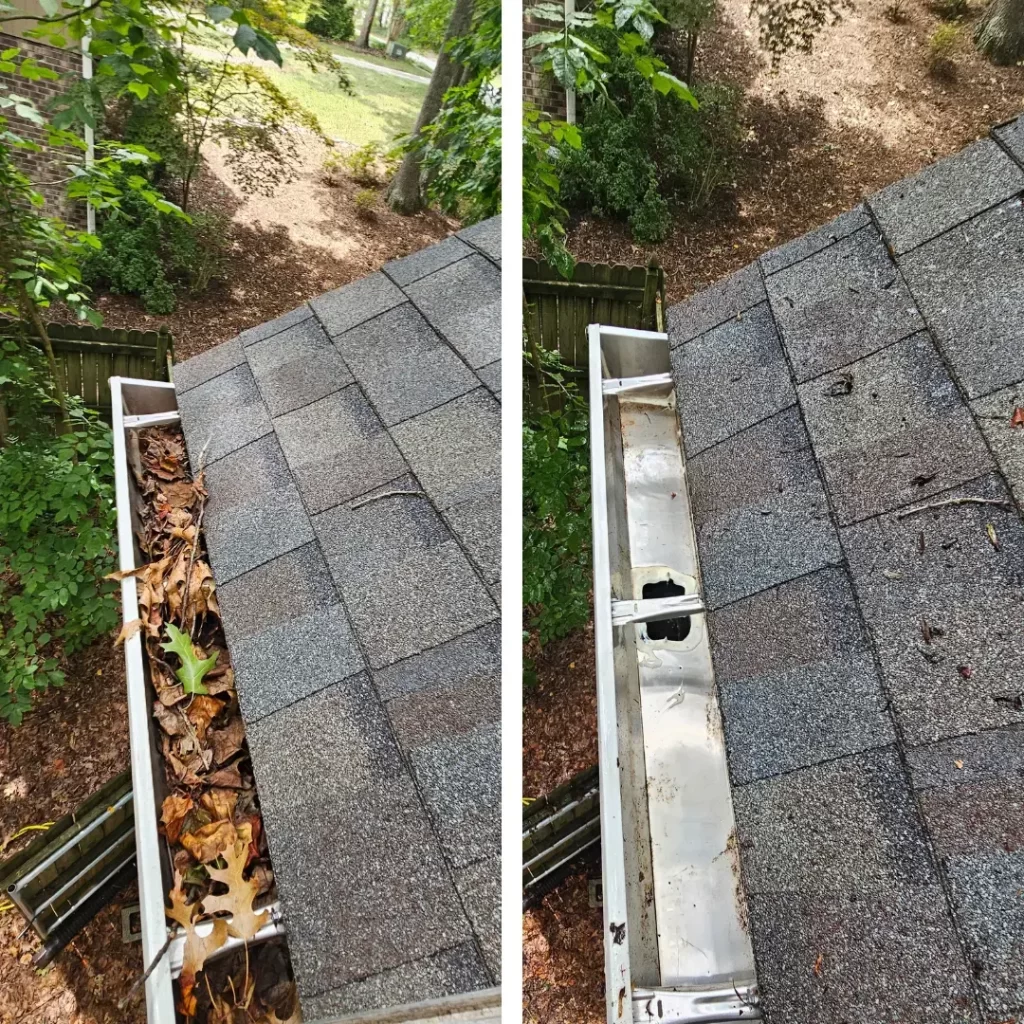
Summer: Storm Debris and System Strain
Severe thunderstorms in summer deposit twigs, leaf fragments, and roofing debris into gutter systems, often in a single event. Even recently cleaned gutters may clog again. Mid-season inspections help Newark homeowners prevent sudden overflow during storms, especially in neighborhoods with layered roofing or heavy tree density.
Fall: Leaf Volume and Ice Risk Preparation
Newark’s tree-lined streets shed enormous leaf volumes from late October through November. These leaves trap moisture and rapidly decompose, forming dense, heavy blockages. If not cleared before the first frost, this organic buildup sets the stage for damaging winter ice dams and gutter detachment.
How to Know It’s Time to Clean Your Gutters
Noticing early signs of clogged gutters allows Newark homeowners to prevent expensive damage to their roofs, basements, and foundations. Below are the most reliable indicators that your gutters need immediate cleaning:
1. Water Overflow During Rainfall
When water spills over the gutter edges instead of exiting through downspouts, your system is blocked. In Newark’s older neighborhoods, this often leads to basement seepage, sidewalk heaving, and landscape washout.
2. Sagging or Pulling Away From the Roofline
If your gutters appear misaligned or are separating from the roofline, they’re likely overloaded with soaked debris. This added weight strains the mounting hardware and risks detaching sections entirely, especially on homes with historic cornices or extended eaves.
3. Vegetation or Plant Growth
Vegetation growing from the gutter line signals months of organic buildup. In Newark’s tree-heavy districts like Forest Hill or Ironbound, pollen, soil particles, and leaves can form compost-like conditions ideal for weed growth.
4. Visible Debris or “Tiger Stripes”
If leaves, sludge, or twigs are visible from the ground, your gutters are clogged. Dark streaks called “tiger stripes” along the gutter face come from dirty water spilling over and staining the surface.
5. Mold, Mildew, or Algae on Siding or Roof
Persistent moisture due to clogged gutters creates growth zones for algae and mold, particularly on shaded sides of Newark homes. This buildup degrades siding, softens wood, and increases pest attraction.
6. Soil Erosion or Pooling Water Near the Foundation
Newark’s dense urban layout makes proper drainage critical. If you see puddles near the foundation or soil erosion along the perimeter, your gutters aren’t directing runoff far enough from your home’s base.
7. Insect or Animal Activity
Stagnant water in clogged gutters attracts mosquitoes, while accumulated debris invites rodents and nesting birds. These conditions worsen drainage and add long-term maintenance issues.
Suggested Cleaning Schedules for Newark Homeowners
Your ideal gutter cleaning schedule in Newark depends on tree density, roof structure, and local seasonal weather. Follow these Newark-specific guidelines:
Twice-Yearly (Minimum)
When: April and November > Best for: Newark homes with low tree exposure and no history of drainage issues common in newer
Three Times Per Year
When: Early spring, late June (after seed drop), late fall > Best for: Properties near Red Maples, American Sycamores, or with aging gutter systems typical in neighborhoods like Forest Hill or Clinton Hill
Quarterly (Every 3 Months)
When: Spring, early summer, fall, pre-winter > Best for: Homes with heavy canopy cover, steep-pitched roofs, or prior water infiltration especially in areas with mature landscaping or historic facades
Post-Storm or As-Needed Cleaning
Trigger: After high-wind thunderstorms or Nor’easters > Why: Newark storms can clog gutters overnight with twigs, roof debris, and foliage prompting immediate service to avoid overflow or fascia damage
What Does Gutter Cleaning Cost in Newark?
The average cost for gutter cleaning in Newark ranges from $212 for smaller homes to over $329 for larger properties, based on total linear footage and debris buildup severity.
In Newark, Clean Pro Gutter Cleaning charges approximately $2 per linear foot, with a minimum service fee that scales based on your home’s square footage and gutter accessibility.
What’s The Best Gutter Cleaning Service in Newark?
Clean Pro Gutter Cleaning is Newark’s most trusted gutter service provider, renowned for rapid scheduling, long-lasting results, and its proprietary AquaBlast system that clears even dense seasonal blockages.
With over 425 five-star reviews from New Jersey homeowners and 24 years of localized experience, our licensed Newark technicians handle everything from spring seed pod buildup to heavy autumn leaf fall. Every service includes a full debris flush, downspout inspection, and water flow test, keeping your system functional through New Jersey’s unpredictable weather.
✅ Appointments available Monday through Saturday, with most cleanings scheduled within 72 hours of booking
✅ Fully licensed and insured professionals who live and work in Newark
✅ Pricing starts at $212, backed by a 100% satisfaction guarantee
Whether you’re dealing with post-storm clogs, pooling runoff, or winter ice dam risks, Clean Pro Gutter Cleaning in Newark delivers expert maintenance that protects your property year-round.
Why Choose Clean Pro Gutter Cleaning?
A Personal Promise from Clean Pro’s Owner:
“Homeowners can count on me and my team at Clean Pro for exceptional results. We have been in business since 2001 and served Tens of thousands customer since that time. ”
– Jonathan D. Byrd I, Founder & CEO

Ready to Protect Your Home?
Save Big with Clean Pro Gutter Cleaning Today
Stop worrying about your gutters. Cleanings start at just $212, so everyone can afford it. Get the best gutter cleaning in Newark, fast and hassle-free. At Clean Pro Gutter Cleaning, we have you covered!