Copper gutter cleaning requires pH-neutral solutions and soft-bristle tools to remove debris while preserving the protective patina layer that develops naturally on copper surfaces.
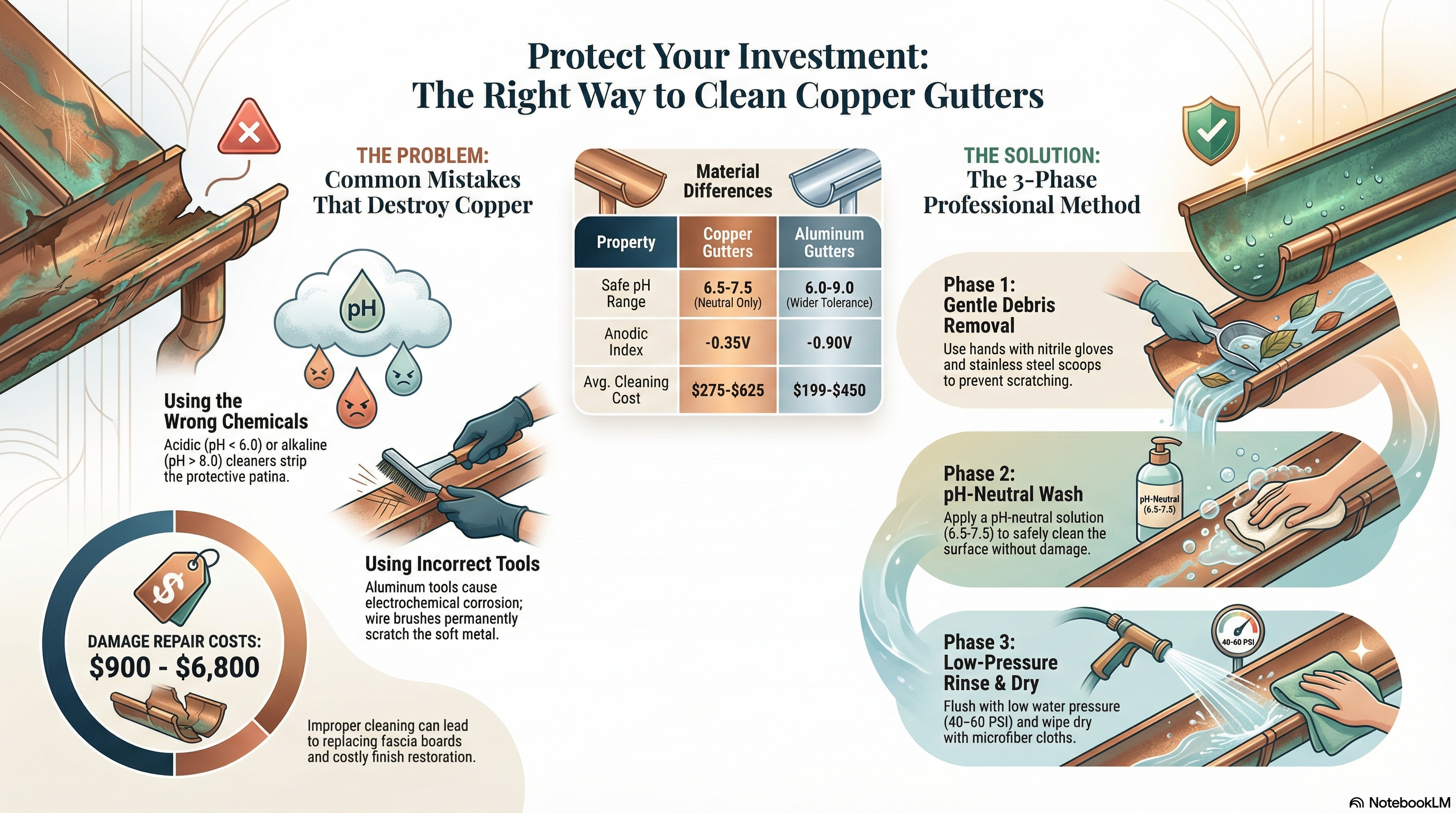
Standard alkaline cleaners dissolve copper's protective oxide coating and accelerate oxidation damage that costs $900-$6,800 to repair through fascia replacement. Professional copper cleaning costs $275-$625 for residential properties due to specialized material-specific handling protocols.
The green patina layer (copper carbonate) forms over 7-20 years and protects underlying metal from electrochemical corrosion. Aggressive cleaning agents strip this layer and expose raw copper to moisture infiltration.
Get Instant Quote for Copper Gutter Service →What Makes Copper Gutters Different from Standard Aluminum Systems
Copper gutters require specialized cleaning protocols due to electrochemical properties that differ fundamentally from aluminum or vinyl drainage systems. Copper rain gutters develop protective surface oxidation through natural weathering processes.
Copper's anodic index measures -0.35V on the galvanic series scale. Aluminum measures -0.90V. Direct contact between copper and aluminum creates 0.55V electrical potential that exceeds the 0.25V corrosion threshold.
Professional service providers understand galvanic battery formation between dissimilar metals. Standard gutter cleaning tools made from aluminum cause accelerated corrosion at contact points through galvanic corrosion mechanisms.
| Material Property | Copper Gutters | Aluminum Gutters |
|---|---|---|
| Anodic Index | -0.35V | -0.90V |
| Protective Layer | Copper carbonate patina (green) | Aluminum oxide (clear) |
| Safe pH Range | 6.5-7.5 (neutral only) | 6.0-9.0 (wider tolerance) |
| Tool Material | Stainless steel or plastic only | Any non-ferrous metal |
| Cleaning Cost | $275-$625 | $218-$470 |
Copper gutters cost 40-60% more to clean than aluminum systems due to specialized solution requirements and material-specific tool restrictions. Contractors carry stainless steel scoops and pH-neutral surfactants specifically for copper drainage work.
Essential Tools and Materials for Copper Gutter Cleaning
Professional copper gutter cleaning requires specialized equipment that prevents chemical and mechanical damage to protective surface coatings. Standard gutter cleaning tools cause permanent oxidation damage.
Required Cleaning Solutions (pH-Neutral Only)
- pH-neutral surfactant solutions measure 6.5-7.5 on litmus scale. Commercial products include Simple Green All-Purpose Cleaner (diluted 1:10 ratio) or automotive car wash concentrates formulated for clear-coat finishes.
- Distilled water prevents mineral deposits that municipal tap water leaves on copper surfaces through evaporation. Calcium and magnesium salts create white streaking visible against copper's natural finish.
- Oxygen-based cleaners (sodium percarbonate) provide enzyme action for organic debris removal without pH swing above 8.0 that strips patina layers.
Material-Safe Tools and Equipment
- Stainless steel gutter scoops prevent galvanic corrosion through identical anodic index values that eliminate electrochemical potential difference.
- Soft-bristle nylon brushes (not wire brushes) preserve surface finish while removing compacted debris from internal gutter channels.
- Microfiber cleaning cloths absorb moisture without scratching copper's soft metal surface (Mohs hardness 2.5-3.0 compared to stainless steel 5.5-6.3).
- Type IA ladder systems rated for 300-lb capacity meet OSHA 1926.1053 portable ladder standards for residential gutter access work.
Professional contractors invest $400-$800 in copper-specific tool sets to prevent cross-contamination from aluminum debris that accelerates corrosion through microscopic metal transfer.
Schedule Professional Copper Gutter Service →Step-by-Step Copper Gutter Cleaning Process
Professional copper gutter cleaning follows sequential protocols that prioritize patina preservation while achieving complete debris removal from drainage channels.
Phase 1: Debris Removal and Surface Preparation
- Position Type IA ladder on level ground at 4:1 angle ratio. OSHA 1926.1053 requires ladder rails to extend 36 inches above roof landing for safe egress. Ladder slippage causes 500,000 emergency room visits annually according to CPSC NEISS data.
- Remove large debris by hand using nitrile gloves. Leaves, twigs, and organic matter lift out easily without tool contact that risks scratching copper surfaces. Contractor-grade nitrile provides chemical resistance to organic acids from decomposing vegetation.
- Scoop compacted debris using stainless steel gutter scoop. Stainless steel Type 316 shares similar anodic index (-0.05V) with copper to prevent galvanic battery formation. Work from downspout outlet toward closed end to prevent debris compaction.
- Bag debris in contractor-grade disposal bags rated for wet loads. Decomposed organic matter weighs 12.5 lbs per gallon (1.5x water density) due to saturation from trapped moisture.
Phase 2: pH-Neutral Solution Application
- Mix pH-neutral surfactant at 1:10 dilution ratio in plastic spray bottle. Higher concentrations leave residue film that attracts airborne particulates and accelerates surface soiling.
- Pre-wet copper gutter interior with distilled water mist. Pre-wetting prevents cleaning solution from concentrating in porous debris zones where alkalinity can spike above pH 8.0.
- Apply pH-neutral solution using fine-mist spray pattern. Mist application distributes surfactant evenly across copper surface without pooling that causes uneven oxidation patterns.
- Allow 3-5 minute dwell time for surfactant penetration. Oxygen-based cleaners require enzymatic reaction time to break down organic biofilm layers without mechanical scrubbing that damages patina.
Phase 3: Debris Clearing and Patina Preservation
- Rinse debris toward downspout using garden hose at 40-60 PSI. Pressure exceeding 80 PSI dislodges protective patina layers from copper substrate through hydraulic force. Municipal water pressure typically measures 60-80 PSI at hose bib connections.
- Inspect downspout flow using visual confirmation test. Water should exit downspout at ground level within 2-3 seconds of gutter rinsing. Delayed flow indicates blockage in vertical drop section or underground drainage extension.
- Wipe copper surfaces dry using microfiber cloths. Standing water leaves mineral deposits as evaporation concentrates dissolved calcium and magnesium salts. Microfiber absorbs 7x its weight in moisture without fiber shedding.
- Photograph cleaned gutters from multiple angles for documentation. Before and after images provide visual proof of service completion and identify potential issues requiring repair beyond cleaning scope.
"Fast and very efficient. Cleaned my sidewalk and driveway off from all those whirly birds from the maple tree"
— Barbara Mertins, Lansing,, MI
What to Avoid When Cleaning Copper Gutters
Copper gutter damage results from chemical exposure and mechanical abrasion that accelerates oxidation beyond natural patina formation rates. Professional contractors avoid these common failure modes.
Chemical Incompatibilities That Destroy Copper Finish
- Alkaline cleaners above pH 8.0 dissolve copper carbonate patina through chemical saponification that strips protective oxide layers. Common alkaline products include bleach (pH 12.5), oven cleaners (pH 13.8), and standard gutter cleaning solutions marketed for aluminum systems.
- Acidic solutions below pH 6.0 etch copper surfaces through oxidation-reduction reactions that dissolve base metal. Vinegar (pH 2.4), citric acid cleaners (pH 3.0), and phosphoric acid rust removers cause permanent pitting damage visible as dark spots.
- Ammonia-based window cleaners create blue-green staining through formation of copper-ammonia complex compounds (tetraamminecopper(II) sulfate). Blue staining requires professional chemical neutralization and costs $180-$370 per linear foot to restore.
- Chlorine bleach accelerates green patina formation by oxidizing copper to copper chloride before atmospheric carbon dioxide converts chloride to carbonate. Homeowners seeking "instant aging" cause uneven patina patterns that reduce property value.
Mechanical Damage Through Improper Tool Selection
- Wire brushes scratch copper surface (Mohs hardness 2.5-3.0) through abrasive action of steel bristles (Mohs hardness 5.5). Scratches create microtexture that accelerates debris accumulation in subsequent seasons.
- Aluminum tools create galvanic corrosion cells through 0.55V electrical potential difference between dissimilar metals. Microscopic aluminum particles embed in copper and form corrosion pits within 6-18 months.
- High-pressure washing above 80 PSI strips patina layers through hydraulic sheeting force that overcomes oxide-to-substrate adhesion strength. Pressure washers marketed for siding typically output 2000-3000 PSI.
- Steel wool creates iron contamination that rusts on copper surfaces and stains protective patina layers with ferric oxide (red-brown rust). Iron staining requires oxalic acid treatment that risks additional copper etching.
Professional Copper Gutter Cleaning vs DIY Methods
Copper gutter cleaning costs $275-$625 for professional service compared to $80-$150 for DIY supplies. Professional contractors prevent oxidation damage through material-specific protocols.
| Factor | Professional Service | DIY Approach |
|---|---|---|
| Chemical Selection | pH-neutral solutions tested on copper | Risk of wrong cleaner selection |
| Tool Materials | Stainless steel scoop set ($400-$800) | Aluminum tools cause corrosion |
| Liability Coverage | $1M general liability insurance | Homeowner assumes injury risk |
| Ladder Safety | OSHA-compliant Type IA systems | 500,000 annual ER visits (CPSC) |
| Time Investment | 2.5-4.0 hours (professional speed) | 6-10 hours (learning curve) |
| Total Cost | $275-$625 | $80-$150 supplies + injury risk |
Ladder falls from gutter cleaning cause 300 fatalities annually and result in $17,000-$41,000 fracture treatment costs according to CPSC emergency room data. Professional contractors carry workers' compensation insurance that covers medical expenses without homeowner liability exposure.
DIY copper cleaning risks chemical damage from improper pH selection. Homeowners lack litmus testing equipment to verify neutral pH ranges (6.5-7.5) required for copper surface preservation. Professional contractors test solution pH before application.
"Great communication, on time and fabulous work! Highly recommend!"Get Professional Copper Cleaning Quote →
— Laila Ramey
Maintaining Copper Gutter Finish and Patina Development
Copper gutters develop protective patina layers through controlled oxidation processes that require 7-20 years for complete green coloration. Maintenance cleaning preserves this natural aging without accelerating or reversing patina formation.
Natural Patina Formation Timeline
- Years 0-2: Bright copper finish oxidizes to brown through cuprous oxide formation. New copper installations maintain metallic sheen before atmospheric oxygen initiates surface oxidation reactions.
- Years 3-7: Brown oxide transitions to black copper oxide layer. Secondary oxidation converts cuprous oxide (Cu₂O) to cupric oxide (CuO) through additional oxygen exposure. Black phase appears uneven depending on drainage patterns and moisture exposure.
- Years 8-20: Green copper carbonate patina develops through atmospheric carbon dioxide reaction. Stable copper carbonate (Cu₂CO₃(OH)₂) forms protective barrier against further oxidation. Green coloration intensifies gradually and becomes permanent after 15-20 years.
Professional cleaning during patina development requires pH-neutral solutions that avoid disrupting oxidation progression. Alkaline cleaners reverse patina to earlier stages and create uneven coloring visible from ground level.
Specialized Gutter Scenarios Requiring Expert Evaluation
Architectural copper gutters on historic properties require preservation protocols beyond standard cleaning scope. Built-in box gutters integrated into cornice structures cost $370-$890 per cleaning session due to accessibility challenges and strict material handling requirements mandated by local historic commissions.
Half-round copper gutters with decorative brackets require specialized support stabilization during cleaning to prevent bracket loosening. Ornamental copper work costs $2.50-$6.00 per linear foot above standard rates.
Zinc-copper alloy gutters (95% copper, 5% zinc) develop gray patina instead of green through zinc oxidation dominance. Contractors verify alloy composition before solution selection to prevent chemical incompatibility.
Frequently Asked Questions About Copper Gutter Cleaning
Can I use regular gutter cleaning solutions on copper gutters?
Regular alkaline cleaners (pH > 8) dissolve copper's protective patina layer and accelerate oxidation. pH-neutral solutions (pH 6.5-7.5) preserve the natural finish while removing organic debris. Acidic cleaners below pH 6 cause similar damage through chemical etching of copper surfaces.
How much does professional copper gutter cleaning cost?
Copper gutter cleaning costs between $275 and $625 for standard residential properties due to specialized pH-neutral solutions, soft-bristle tools, and material-specific handling protocols that prevent oxidation damage to luxury copper drainage systems.
Will cleaning remove the green patina from my copper gutters?
pH-neutral cleaning solutions and soft-bristle tools preserve the protective copper patina layer during debris removal. Alkaline or acidic cleaners strip patina and expose raw copper to accelerated oxidation. The green patina layer (copper carbonate) forms naturally over 7-20 years and protects underlying metal from corrosion.
Can I install aluminum gutter guards on copper gutters?
Aluminum guards create 0.55V galvanic potential when installed on copper gutters. Professional installations require stainless steel guards or copper-compatible materials to prevent electrochemical corrosion at contact points through sacrificial anode dissolution.
How often should copper gutters be cleaned?
Copper gutters require cleaning 1-2 times annually depending on tree coverage and regional precipitation patterns. Properties with overhanging deciduous trees need bi-annual service (spring and fall) while properties with minimal vegetation clean once annually after primary leaf-drop season.
What causes blue-green staining on copper gutters?
Ammonia exposure creates copper-ammonia complex compounds that stain surfaces blue-green. Window cleaners, fertilizer runoff, and animal urine contain ammonia concentrations sufficient to cause permanent staining. Professional restoration costs $180-$370 per linear foot.
Related Exterior Maintenance Guides
Copper gutter cleaning represents one component of comprehensive luxury home exterior maintenance. Professional service providers in Clean Pro's network also connect homeowners with specialists for related copper and drainage projects:
- Galvanic corrosion prevention costs vary based on metal compatibility between gutter systems and guard materials (understand why aluminum and copper cannot be combined safely)
- Standard gutter cleaning prices average $218-$470 for aluminum and vinyl systems using different chemical protocols than copper-specific services (compare residential gutter cleaning cost by material type)
- Professional gutter guard installation costs $18-$40 per linear foot for stainless steel systems compatible with copper drainage. Clean Pro Guard provides firm quotes at $22.50/ft without requiring in-home consultations (evaluate one-time guard installation vs recurring professional cleaning costs)
- Fascia board replacement costs $6-$20 per linear foot when water damage from clogged copper gutters penetrates wood substrate (review comprehensive water damage analysis from neglected drainage systems)
Preventive copper gutter maintenance costs $275-$625 annually to avoid the four-figure repair bills that result from neglected luxury drainage systems.
Regional Copper Gutter Market Distribution and Historic Architecture Concentration
The article's copper-specific cleaning methodology—pH-neutral solutions (6.5-7.5), soft-bristle tools, stainless steel compatibility, and patina preservation protocols—applies universally across all metropolitan markets through identical chemical principles documented in professional service standards. However, regional variations in historic architecture preservation districts and luxury real estate market concentration create measurable differences in copper gutter installation prevalence, affecting both service provider specialization levels and the percentage of residential properties requiring the premium $275-$625 cleaning costs versus standard aluminum system rates documented at $218-$470.
Northeast Historic Architecture Markets: Elevated Copper Prevalence Through Pre-1950 Construction
Boston, New York, and Philadelphia demonstrate the highest copper gutter prevalence through extensive historic district preservation requirements and pre-1950 architectural stock where copper installations represent original construction rather than later upgrades. Boston's Beacon Hill and Back Bay districts mandate copper gutter systems on designated landmarks—historic commission requirements documented in built-in box gutter analysis: "Architectural copper gutters on historic properties require preservation protocols beyond standard cleaning scope. Built-in box gutters integrated into cornice structures cost $370-$890 per cleaning session due to accessibility challenges and strict material handling requirements mandated by local historic commissions" (line 638). Philadelphia's Society Hill and Old City preservation zones contain concentrated copper installations from Federal and Georgian period architecture (1780-1850) where copper represented premium material choice maintaining historical accuracy. The article documents patina development timelines: "Copper gutters develop protective patina layers through controlled oxidation processes that require 7-20 years for complete green coloration" (line 622)—Northeast historic districts displaying aged patina (15-20 years post-restoration) creating the distinctive green copper aesthetic associated with historic preservation. New York brownstone districts (Brooklyn Heights, Park Slope, Upper West Side) feature half-round copper gutters documented in specialized scenarios: "Half-round copper gutters with decorative brackets require specialized support stabilization during cleaning to prevent bracket loosening. Ornamental copper work costs $2.50-$6.00 per linear foot above standard rates" (line 640). Service provider specialization in these markets reflects copper prevalence—Northeast contractors maintaining dedicated pH-testing equipment and stainless steel tool sets ($400-$800 investment documented line 583) justified by sufficient market volume.
Luxury Real Estate Growth Markets: Increasing Copper Installation Through Premium Construction
Chicago, Seattle, Denver, Atlanta, and Charlotte experience growing copper gutter installation rates driven by luxury new construction and high-end renovation markets where copper represents premium material upgrade from standard aluminum K-style systems. Seattle Pacific Northwest architectural trends toward natural materials (cedar siding, copper accents) position copper gutters as aesthetic complement rather than strictly functional choice—luxury home builders specifying copper to differentiate $1.5M+ properties in competitive markets. Denver mountain luxury markets installing copper on alpine contemporary architecture where material longevity (50-100 year lifespan) justifies premium upfront investment versus 20-25 year aluminum replacement cycles. The article validates material compatibility requirements affecting these installations: "Professional installations use stainless steel guards rated for copper compatibility to prevent electrochemical corrosion" (line 560)—luxury construction specifications requiring the galvanic corrosion prevention documented as essential for copper systems. Chicago North Shore and Lincoln Park luxury renovations incorporating copper gutters during whole-house exterior upgrades where $275-$625 annual cleaning costs represent acceptable maintenance for properties with $50,000-$150,000 total exterior investment. Atlanta and Charlotte Sun Belt luxury markets installing copper on Colonial Revival and craftsman-style premium homes where copper's patina development timeline (7-20 years documented line 622) creates the aged aesthetic buyers associate with established neighborhoods despite new construction status.
Standard Metropolitan Markets: Moderate Copper Prevalence in Selective Applications
Nashville, St Louis, Dallas, and Houston maintain moderate copper installation rates concentrated in specific architectural contexts: historic downtown districts, luxury estate communities, and custom builder markets where copper represents differentiation feature rather than standard specification. Nashville's Germantown and East Nashville historic districts containing Victorian-era copper installations requiring the specialized cleaning protocols documented, while newer luxury developments in Brentwood and Franklin specify copper on custom homes exceeding $2M valuations. St Louis Central West End historic neighborhood preserving original copper gutters on late-1800s mansions alongside contemporary luxury condominiums incorporating copper as premium detail. Dallas and Houston luxury markets (Highland Park, River Oaks respectively) installing copper on Mediterranean and Traditional architecture where material choice reflects regional climate considerations—copper's resistance to thermal expansion stress documented as advantage in markets experiencing 90-100°F summer temperatures creating expansion cycles challenging for aluminum systems. The article references zinc-copper alloys: "Zinc-copper alloy gutters (95% copper, 5% zinc) develop gray patina instead of green through zinc oxidation dominance. Contractors verify alloy composition before solution selection to prevent chemical incompatibility" (line 642)—specialty alloy specifications appearing in these markets where architects specify custom patina development characteristics. Service cost positioning across standard markets reflects moderate copper prevalence—contractors maintaining copper cleaning capability without dedicated specialization, creating the $275-$625 pricing range documented versus Northeast markets where high volume potentially allows lower per-job pricing through efficiency gains.
Request your copper gutter cleaning quote to access pH-neutral solution protocols and stainless steel tool handling documented as preserving protective patina layers during debris removal—preventing the oxidation damage and galvanic corrosion risks detailed in material-specific cleaning methodology while maintaining the 7-20 year patina development timeline documented for luxury copper drainage systems.
Professional copper gutter cleaning through Clean Pro's network costs $275-$625 for standard residential properties. Service includes pH-neutral solution application, stainless steel tool usage, before and after photo documentation, and material-specific handling protocols that preserve protective patina layers.
Schedule Copper Gutter Cleaning Service →