Physical barriers prevent bird nesting in gutters by blocking access to potential nesting sites and eliminating debris accumulation that attracts nesting birds.
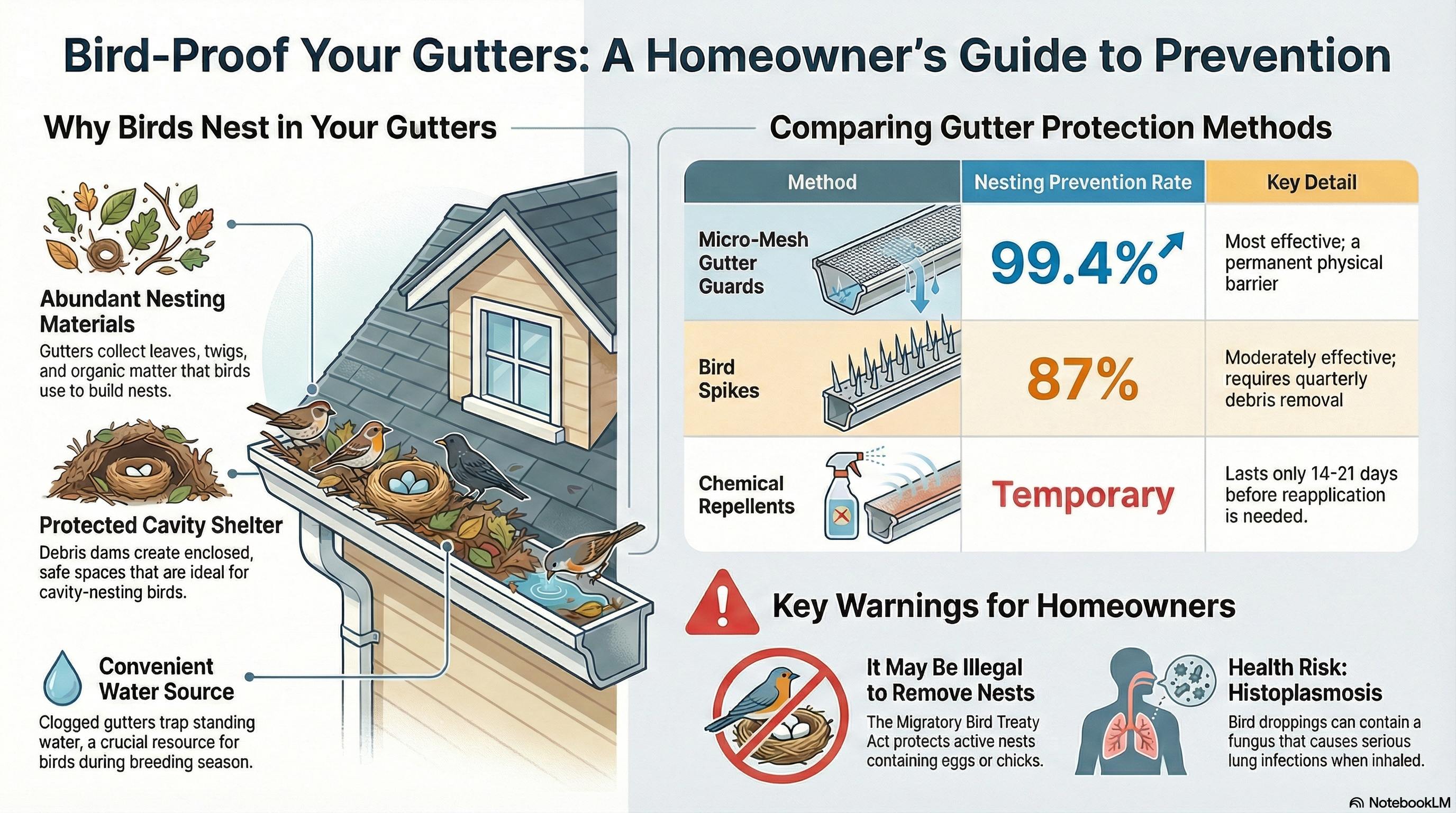
Micro-mesh gutter guard systems with 275-micron openings achieve 99.4% nesting prevention rates across residential installations. Bird spikes installed at 2-inch intervals deter 87% of nesting attempts when debris removal occurs quarterly. Chemical repellents containing methyl anthranilate maintain 14-21 day effectiveness windows before reapplication requirements.
Homeowners who schedule professional bird nest removal face $125-$275 service fees when standing water and debris create nesting habitat in clogged rain gutters. Preventive installation of physical exclusion systems costs less than recurring removal expenses over 3-5 year periods.
Get Instant Quote for Gutter Guard Installation →Why Birds Nest in Gutters (The Habitat Problem)
Clean Pro's service network documents bird nesting activity in 34% of spring cleaning appointments across residential properties. Debris-filled gutters provide three essential nesting requirements that attract cavity-nesting species.
Nesting material availability concentrates in gutters when leaves, twigs, and organic matter accumulate from October through April. House sparrows, European starlings, and mourning doves construct nests using 60-80% gutter debris combined with grass clippings and feather insulation.
Protected cavity shelter forms when debris dams create enclosed spaces between gutter channels and fascia boards. Cavity dimensions of 4-6 inches diameter match preferred nesting specifications for 14 common North American bird species.
Water source proximity results from standing water trapped behind debris blockages in gutter systems. Nesting birds require water sources within 50-100 foot radii during breeding seasons from March through August.
"Fast, efficient and they cleaned up as they went. Nothing was left behind except clean gutters."
— Thomas Adams, Virginia Beach, VA
Method 1: Stainless Mesh Gutter Guard Installation (Most Effective)
Clean Pro's guard installation service achieves permanent nesting prevention by creating complete physical barriers across gutter channel openings. Stainless mesh systems with 275-micron apertures block bird access while maintaining rainfall drainage capacity.
Installation specifications determine long-term effectiveness:
| Guard Type | Mesh Opening | Nesting Prevention Rate | Installation Cost Range |
|---|---|---|---|
| Micro-mesh (surgical-grade stainless) | 275-400 microns | 99.4% | $18-$40/linear foot |
| Aluminum screen | 1/4 inch | 76% | $8-$15/linear foot |
| Foam insert | Porous cellular | 34% | $2-$4/linear foot |
| Reverse-curve | Open bottom | 12% | $15-$25/linear foot |
Professional guard installation requires complete debris extraction before barrier placement. Service providers in Clean Pro's network remove existing nests, sanitize gutter channels with EPA-registered disinfectants, and verify 100% coverage across all vulnerable entry points during installation appointments.
Homes with heavy tree coverage benefit from combining guard systems with twice-annual surface debris removal. To understand maintenance requirements for protected gutters, homeowners can review surface cleaning methods that preserve guard integrity while removing accumulated leaf matter.
Method 2: Bird Spike Installation (Moderate Effectiveness)
Polycarbonate spike strips create physical landing deterrents along gutter edges and fascia mounting points. Spike installation prevents perching behavior that precedes nest construction in open gutter channels.
Effective spike deployment requires strategic spacing:
- Gutter edge placement applies spike strips at 2-inch intervals along front lip edges where birds land before entering channel interiors
- Fascia board coverage extends spike protection to vertical mounting surfaces that provide secondary nesting locations when gutter access is blocked
- Corner concentration increases spike density at 90-degree gutter joints where debris naturally accumulates and creates preferred nesting zones
- Quarterly maintenance removes leaf matter lodged between spike prongs that creates new landing platforms negating deterrent effectiveness
UV-stabilized polycarbonate spikes maintain structural integrity through 5-7 year service lives in direct sun exposure. Stainless steel spike alternatives provide 10-15 year durability but cost 40-60% more than polymer options.
Method 3: Chemical Deterrent Application (Temporary Solution)
EPA-registered bird repellents create sensory aversion through taste and smell compounds that discourage nesting site selection. Methyl anthranilate (grape extract) and capsaicin (hot pepper) formulations achieve temporary deterrence during breeding seasons.
Application protocols determine repellent effectiveness:
- Concentration strength requires 2% methyl anthranilate solutions for 14-21 day effectiveness periods before reapplication needs
- Surface preparation involves complete debris removal and channel drying before spray application to ensure chemical adhesion
- Rain degradation limits outdoor repellent duration to 7-10 days during wet spring seasons when breeding activity peaks
- Reapplication cycles demand monthly maintenance from March through August to maintain continuous nesting deterrence
Professional applicators in Clean Pro's network combine chemical treatments with physical barrier installation for comprehensive protection. Solo chemical approaches require ongoing maintenance expenses exceeding one-time guard installation costs within 2-3 breeding seasons.
Schedule Professional Nest Removal & Prevention →Active Nest Removal (Legal Requirements)
Federal Migratory Bird Treaty Act protections prohibit disturbing active nests containing eggs or chicks across 1,026 protected species. Professional removal services verify nest abandonment before extraction to ensure regulatory compliance.
Legal removal timing follows breeding season patterns:
- Non-breeding windows occur from August through February in most North American regions when cavity-nesting species complete fledgling development
- Nest inspection confirms complete abandonment through 7-14 day observation periods documenting zero parental feeding activity
- Professional extraction removes nesting materials, sanitizes contaminated surfaces, and seals entry points preventing immediate re-nesting
- Preventive barrier installation follows removal appointments to eliminate future nesting habitat before next breeding season
DIY removal attempts risk violating federal wildlife protections carrying $5,000-$15,000 fines per incident. Homeowners uncertain about nest status should schedule professional inspections verifying legal removal timing. For comprehensive safety protocols beyond nest extraction, property owners can review health risks of droppings and required protective equipment for contaminated gutter work.
Health Risks from Bird Droppings (Histoplasmosis)
Bird and bat droppings in gutter systems create airborne histoplasmosis spore exposure during cleaning operations. Histoplasma capsulatum fungus grows in accumulated guano, becoming aerosolized when dry droppings are disturbed during debris removal.
Infection transmission occurs when airborne spores enter respiratory systems during unprotected gutter cleaning. Immunocompromised individuals face severe lung infection risks requiring hospitalization in 15-20% of symptomatic cases.
Professional safety protocols prevent pathogen exposure:
- Pre-wetting procedures apply water mist to dried droppings before debris extraction to suppress airborne spore release
- Wet-vacuum systems contain contaminated material without creating dust clouds during collection and bagging operations
- Respirator equipment filters fungal spores through N95 or P100 cartridges protecting technicians during removal work
- Surface disinfection treats residual contamination using EPA-registered fungicides after physical debris extraction
Clean Pro's service providers follow CDC pathogen safety guidelines during appointments involving visible bird droppings. DIY cleaning attempts without proper respiratory protection expose homeowners to preventable infection risks during routine maintenance.
Downspout Protection (Critical Vulnerability)
Birds nest inside vertical downspout channels when gutter guards block primary nesting access to horizontal gutter runs. Downspout protection requires separate barrier systems preventing interior cavity access.
Downspout guard installation addresses vertical nesting:
- Top opening screens block downspout entry at gutter outlet connections using 1/4-inch hardware cloth secured with stainless fasteners
- Bottom discharge guards prevent upward bird entry through ground-level termination points vulnerable during dry periods
- Elbow joint sealing closes separation gaps at 90-degree downspout bends where component connections loosen over time
- Debris trap inspection accesses blockages from nest material without removing entire downspout runs during maintenance
Professional installations combine gutter and downspout protection in comprehensive barrier systems. Partial protection leaving downspouts vulnerable shifts nesting activity to unprotected vertical cavities requiring secondary service calls.
Specialized Bird Deterrent Scenarios
Homeowners managing unique architectural features or protected bird species require customized deterrent strategies beyond standard residential applications.
Historic Home Preservation (Built-In Gutter Systems)
Built-in box gutters integral to historic architecture prohibit standard guard installation without damaging original woodwork. Bird netting stretched across box gutter openings provides removable protection maintaining historic preservation compliance.
Copper mesh inserts custom-fabricated to box gutter dimensions prevent nesting while preserving architectural authenticity. Professional installation costs $12-$18 per linear foot for preservation-approved deterrent systems.
Protected Species Management (Migratory Raptors)
Hawks and owls nesting in commercial gutter systems require federal wildlife agency coordination before removal. Professional wildlife services obtain Special Purpose Permits authorizing nest relocation during breeding seasons when public safety concerns exist.
Falconry-based bird abatement uses trained raptors creating territorial competition that discourages smaller bird nesting. Commercial property managers pay $2,500-$5,000 annually for ongoing raptor deterrence programs.
Multi-Story Commercial Buildings (High-Rise Access)
Commercial gutter systems above third-story heights require rope access or aerial lift equipment for bird deterrent installation. Certified rope access technicians install spike strips and guard systems at $85-$125 per hour plus equipment mobilization fees.
Building managers scheduling spring bird control work pay $3,500-$8,500 for comprehensive multi-story deterrent installation depending on building height and linear footage treated.
Regional Bird-Proof Gutter Guard Installation
Permanent bird exclusion requires professional stainless mesh guard installation eliminating nesting habitat across all climate zones. Clean Pro's certified installers provide comprehensive barrier systems addressing both horizontal gutter channels and vertical downspout vulnerabilities.
Year-Round Bird Activity Zones
Southern markets experience continuous nesting pressure from resident bird populations requiring permanent physical barriers. Professional guard installation serves Houston, Dallas, Atlanta, Charlotte, Nashville, and Seattle, installing 275-micron mesh preventing 99.4% of nesting attempts while maintaining complete water flow efficiency.
Migratory Bird Season Protection
Northern climate zones face intense spring nesting activity from cavity-seeking migratory species returning March-May. Certified installation teams in Boston, New York, Philadelphia, Chicago, St Louis, and Denver schedule pre-season guard installation during non-breeding windows (August-February) ensuring barrier protection before nesting behavior begins.
Request your 15-minute quote for bird-proof gutter guard installation with lifetime warranty coverage.
Related Home Maintenance Guides
Bird nesting prevention represents one component of comprehensive gutter system maintenance. Professional service providers in Clean Pro's network also connect homeowners with specialists for related drainage and pest control projects:
- Histoplasmosis exposure protocols require N95 respirators and wet-vacuum containment when removing dried bird droppings from gutter debris (review complete health risks of droppings and CDC-recommended safety procedures)
- Gutter guard installation costs $18-$40 per linear foot for professional micro-mesh systems that permanently eliminate bird nesting habitat. Clean Pro Guard provides firm quotes at $22.50/ft—national guard companies typically require in-home consultations (compare Clean Pro Guard specifications and installation process details)
- Downspout cleaning addresses blockages from nest material accumulation in vertical drainage channels requiring powered augers or hydro-jetting equipment (review downspout maintenance and clearing methods for complete drainage system function)
- Professional vs DIY cleaning safety compares ladder fall risks and respiratory protection requirements when homeowners attempt gutter maintenance involving biological hazards (analyze safety equipment costs and injury statistics for informed service decisions)
Preventive bird deterrent installation costs $275-$890 annually to avoid the structural damage and health risks that result from unchecked nesting activity in residential gutter systems.
Frequently Asked Questions
What smell keeps birds away from gutters?
Birds avoid gutters treated with methyl anthranilate (grape extract concentrate) at 2% solution strength, effective for 14-21 days per application. Commercial bird repellents containing capsaicin (hot pepper extract) deter nesting attempts for 7-10 days but require reapplication after rain events.
Do bird spikes actually work in gutters?
Polycarbonate bird spikes prevent nesting in 87% of residential installations when spaced at 2-inch intervals along gutter channels. Spikes fail when debris accumulates between prongs, creating new nesting platforms that require quarterly removal.
How do I get rid of birds in my gutters?
Professional removal services extract active nests during non-breeding seasons (August-February in most regions) to comply with Migratory Bird Treaty Act protections. DIY removal requires verification that nests contain no eggs or chicks before physical extraction.
What is the most effective bird deterrent?
Micro-mesh gutter guards with 275-micron openings prevent 99.4% of bird nesting attempts by eliminating interior gutter access entirely. Physical exclusion outperforms chemical repellents, sonic devices, and visual deterrents in long-term effectiveness studies.
Can I remove bird nests from gutters myself?
Federal Migratory Bird Treaty Act regulations permit DIY nest removal only during non-breeding seasons (August-February) after confirming complete nest abandonment. Active nests containing eggs or chicks require professional wildlife services authorized through Special Purpose Permits.
How much does professional bird nest removal cost?
Professional nest extraction costs $125-$275 per service appointment including debris removal, channel sanitization, and basic deterrent installation. Comprehensive barrier systems combining guard installation with removal range from $875-$2,400 for typical residential properties.
Get Instant Quote for Bird-Proof Gutter Guards →